Washers · upstairs laundries and well water · Kuna
Washer repair in Kuna for the load that will not spin
Clothes still dripping when the cycle ends, a Kuna washer that quit with the tub full, water coming through the ceiling from the upstairs laundry.
$99 to diagnose — folded into the repair once you say yesON THE TRUCK Upstairs laundry rooms20 MIN from Davis Ave · the drive never shows on the invoice
Most of the washers in Kuna were bought in the last ten years, and a lot of them sit upstairs. The two-story houses along Ten Mile Rd, Hwy 69 and the streets behind the new schools put the laundry room upstairs beside the bedrooms, which is convenient until the drain hose jumps the standpipe and the kitchen ceiling shows a brown ring. Front-loaders dominate, often stacked, often the Whirlpool or GE pair from the builder. South of town, along Swan Falls Rd and the acreage roads toward the desert, the washers are older and a well supplies the water, with enough iron to turn a white load orange the first time a filter is skipped.
The common failures follow the housing. In the subdivisions it is drain pumps stopped by hair ties and coins, door boots torn by a zipper, and the occasional main control board that quit after a summer brownout. On the well properties the inlet valves clog with sand and rust, the screens look like a campfire grate, and the fill takes so long the control throws a fault. One scene repeats: a family that both commute to Boise starts a load at six in the morning, the pump fails at the drain, and the tub sits full of grey water all day until someone gets home. That one gets the first slot the next morning, before the drive.
What the symptom points to in Kuna
Stops with the tub full
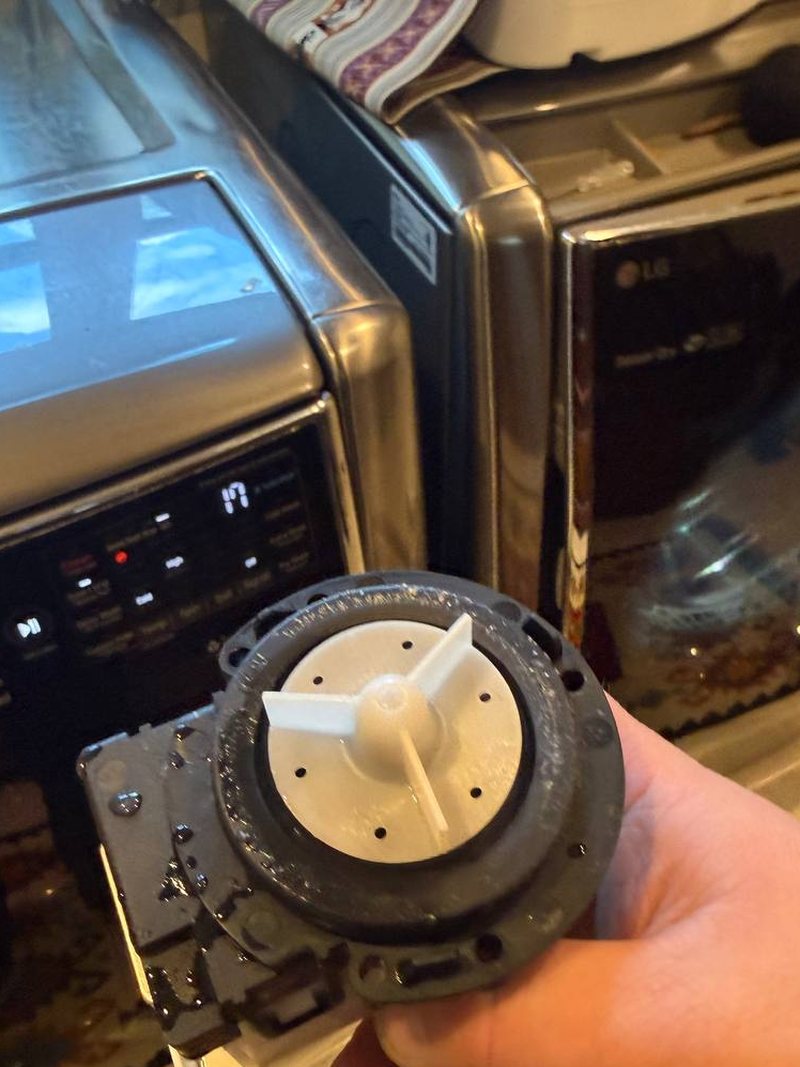
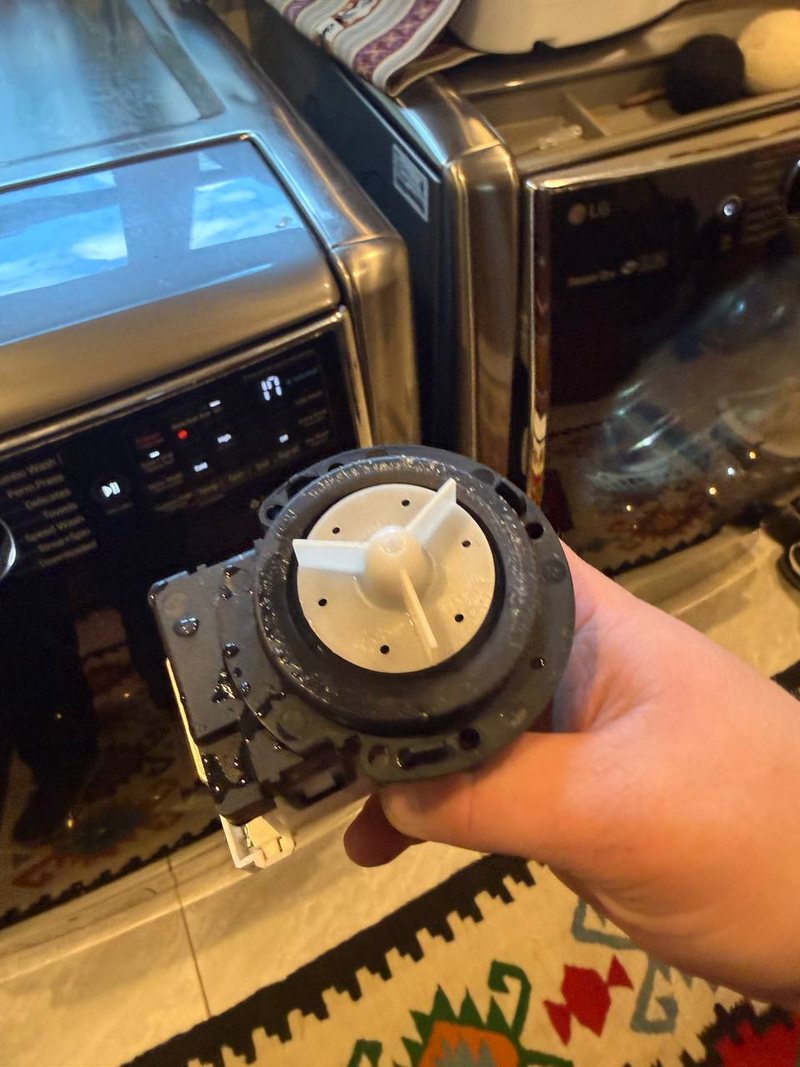
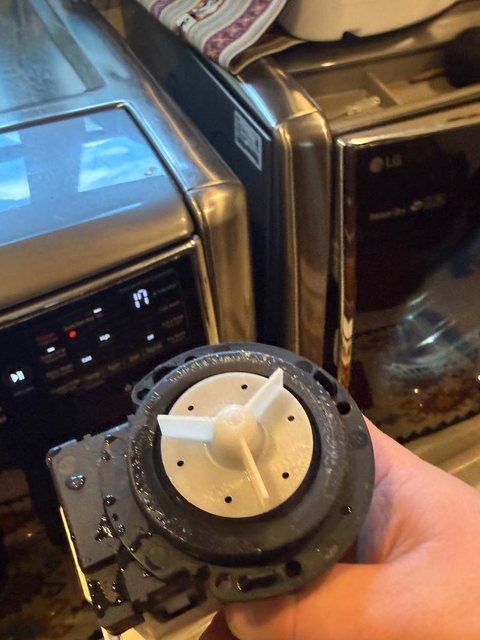
The drain pump has jammed on something from a pocket or its motor has burned out, or the drain hose is kinked behind a stacked pair. The pump housing gets opened and cleared, the windings get a reading, and a pump that reads dead gets replaced. Coins and hair ties are the usual finds in Kuna laundry rooms.
Clothes come out sopping
The tub drained but never reached spin speed. A lock that never confirms it is shut, a belt that has stretched, a clutch worn smooth, or a motor control holding the speed down. We meter the lock and watch the motor under load, and replace the piece that is actually holding the spin back.
Water through the ceiling below
Upstairs laundry. A drain hose that walked out of the standpipe on spin, a door boot leaking at the bottom fold, a supply hose weeping at the crimp, or a drain pan nobody ever plumbed. With the machine pulled out, a full cycle runs and the water gets followed back to where it starts.
Slow fill, then an error
Well sand and iron have plugged the inlet screens, or scale has closed the valve down to a trickle. The screens get cleaned, both solenoids get metered, and a valve narrowed past use gets swapped. On a well property, what stops the repeat is a sediment filter on the supply line.
Hammers on spin and wanders off its spot
Top-load rods and dampers, front-load shocks, or feet that were never set on an upstairs floor that flexes. We replace the worn parts and set the feet properly; a stacked pair gets checked for the strap kit the builder skipped.
Panel lit, nothing starts
The door or lid lock is not reporting closed, or the board is not seeing it. On some front-loaders a child lock is on and nobody remembers setting it. We check the simple things first, then meter the lock and its wiring before any board is discussed.
The procedure
A full fill, drain and spin observed with the machine pulled out
Readings on the drain pump, valve solenoids, lock and motor ahead of naming the part
The repair figure written once, $99 diagnosis in it
Truck stock: pumps, locks, boots, belts and suspension parts for the usual brands
Cycle run to the end and the floor checked, the warranty in writing on the invoice
A Kuna washer visit, start to finish
The washer gets pulled out far enough to see behind it, because half the leaks in Kuna’s upstairs laundry rooms are hoses and standpipes, not the machine. Then a cycle runs stage by stage. Slow fill: the screens come off and the valve gets metered. If the drain stalls the pump housing opens and the impeller gets a look before the windings get a reading. If the spin never comes up, the lock is metered and the motor watched under load, since a lock that reads closed but never tells the board is a wiring or board problem. Then the failed part gets a name and the price goes on paper. On a front-loader with a growling bearing, that price is the real cost of the job, to weigh against the machine’s age.
Samsung, LG, Whirlpool, Maytag, Kenmore, GE, Bosch, Electrolux, Amana, Frigidaire and Speed Queen washers all come through the Kuna route, including the stacked builder pairs that fill the two-story houses off Hwy 69 and the top-loaders that came with the acreage houses down Swan Falls Rd. Boise commuters can take the first stop and be gone before the school buses run; Saturday mornings cover everyone else. Kuna landlords answer the figure by text and receive the invoice, warranty included, by email. Whatever the brand, the arithmetic holds: the diagnosis costs $99, that $99 is one piece of the figure you approve, and no Kuna washer repair is priced before the metering is finished and the figure can be written down.
In Kuna the washer repair figure is written once the meter work is done, and the $99 diagnosis is one piece of it. Turn the work down and the invoice carries only the $99. Request service →
Asked in Kuna
Our upstairs washer in Kuna leaked into the kitchen. Is the washer broken or the plumbing?
We find out by running it. A hose that jumped the standpipe on a heavy spin, a supply hose crimp weeping, and a door boot leaking at the fold all show up differently once the machine is pulled out and a cycle runs. When the house plumbing is at fault and the washer is fine, we tell you so and the visit is $99.
Does well water south of Kuna hurt a washer?
Iron and sand do. They plug the inlet screens, wear the valve seat and leave orange streaks on light loads. The washer itself is fine; the water needs a sediment filter and, on a lot of Kuna acreage, an iron filter ahead of the softener. We clean the screens, swap the valve once it has gone, and say what belongs in front of it.
Can you service a stacked washer and dryer?
Yes. The dryer comes off, the washer gets repaired, and the pair goes back up with the stacking kit checked. Most of the stacked units in the newer Kuna subdivisions are Whirlpool or GE front-loaders and the pumps, boots and locks for them are stocked. Plan on a bit more time than a floor-standing machine.
The washer stopped mid-cycle after the power blinked. What should I try?
Unplug it for a couple of minutes and try a rinse and spin. If it runs, it was the board resetting. If it still will not start, a lock, a board or the motor control has been hurt by the brownout, and we meter each before naming the part. Summer storms send a handful of these calls from Kuna every year.
How early can you come so I still make it to Boise?
First stop leaves Nampa at 7:30 and Kuna is close, so most washer diagnoses and repairs are done and tested before you would normally be on the freeway. Tell dispatch your leave time and the window is built around it. If we have to order something, the second visit lands in the same early slot.
The phone is quicker; the form lands on the same desk. Both get you a text with a window, and until a technician has had a meter on the machine the only figure anyone quotes is $99.
Window texted to you; the technician will call if you would rather talk
$99 buys the meter reading and the diagnosis — no money before that
The repair as one written figure, $99 folded in
Warranty term printed on the invoice
How a visit runs
Four steps, and no step five on the invoice
1
Window
Ring the shop or fill in the form; dispatch answers with a window, and a text follows as the truck pulls off Davis Ave — first stops go to the Boise commuters, Saturday mornings to everyone else.
2
Meter
Measurements come before opinions: amps at the compressor, degrees on the shelf, ohms across the element. The failed part gets its everyday name from the technician, who then writes the repair as a single figure, $99 folded in.
3
Part
The shelves on the truck hold what this valley wears out — inlet valves, defrost heaters, heating elements, igniters, drain pumps, rollers. When something must be ordered, the return trip happens on our calendar and the figure you approved stands.
4
Proof
The machine runs a whole cycle while you watch, panels and floor go back the way they were, and the invoice that reaches your email carries the warranty term.
Washers in Kuna — one written number, fixed once.
$99 puts a meter on the machine. The repair goes on the ticket as one figure with that $99 inside it, the part is usually riding in the truck, and the invoice states the warranty term. Parma pays what Davis Ave pays.