Appliance repair in Downtown Nampa, from the shop on Davis Ave
A warm refrigerator in a 1920s bungalow near Lakeview Park, a dryer running cold in a rental by NNU, a dishwasher leaving water in the tub on Holly St.
$99 to diagnose — folded into the repair once you say yesSIX MACHINES Home baseHOME BASE the truck loads a few blocks over on Davis Ave
The shop sits at 104 Davis Ave in the older street grid, a few blocks from the 12th Avenue corridor and a short drive from the historic district around 1st St S and Front St. Downtown Nampa jobs are the first stops most mornings because the truck is already here. The route loops the bungalows near the old train depot and Lloyd Square, cuts over to the streets around Lakeview Park, then works south through the Northwest Nazarene University neighborhoods along Holly St and Dewey Ave, where a lot of the housing is rentals with a landlord somewhere else. The 1950s and 60s ranches on the numbered streets fill in the rest. Nothing downtown is more than a few minutes from the bench where the technician packs the truck.
Downtown Nampa’s houses are old and its kitchens are small. A 1930s Craftsman has a 24-inch gap where the refrigerator goes and a laundry hookup in a back porch that was never meant for a front-loader. Wiring is often original with a newer panel, so a range that trips a breaker or a dryer with one dead leg is a wiring question as often as an appliance one. City water here is hard groundwater and most of these houses never had a softener, so dishwashers scale up and ice makers starve. Summers bake the refrigerators in kitchens without central air; winters freeze the dryer vents that exit a north wall. We see a lot of secondhand appliances in the rentals, which means a machine can have three previous owners and one strange repair before we meet it.
What Downtown Nampa calls about
Machine
Typical trouble downtown
Refrigerators
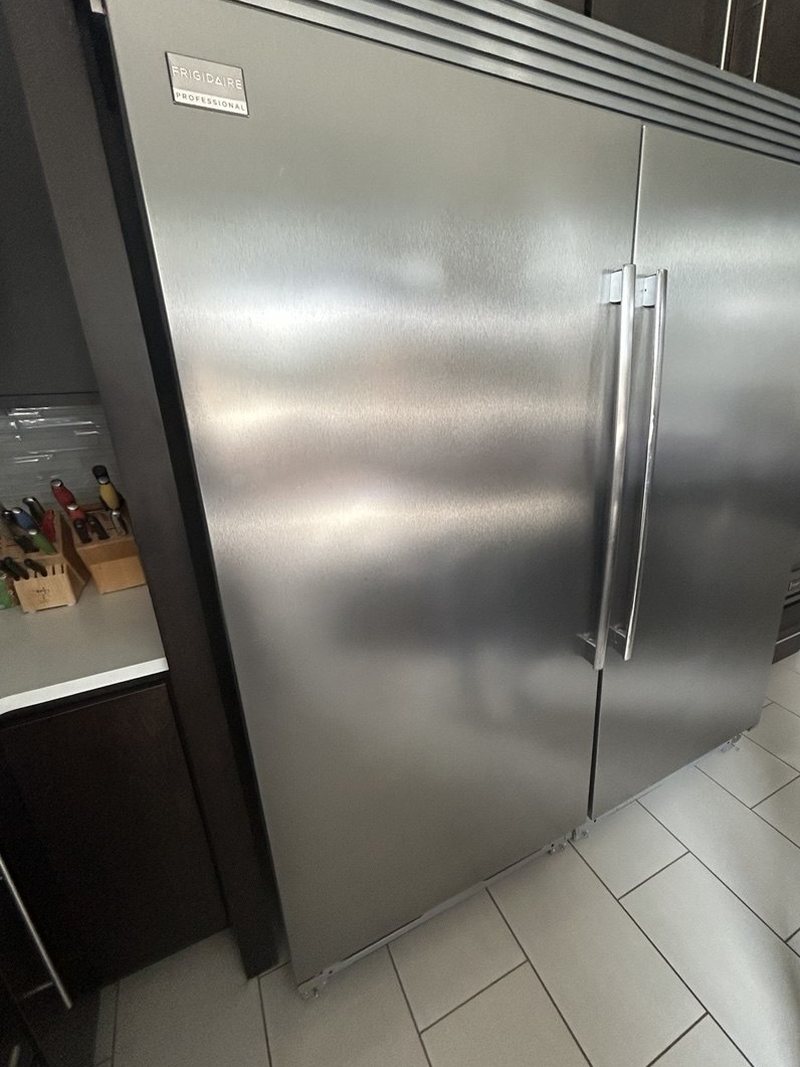
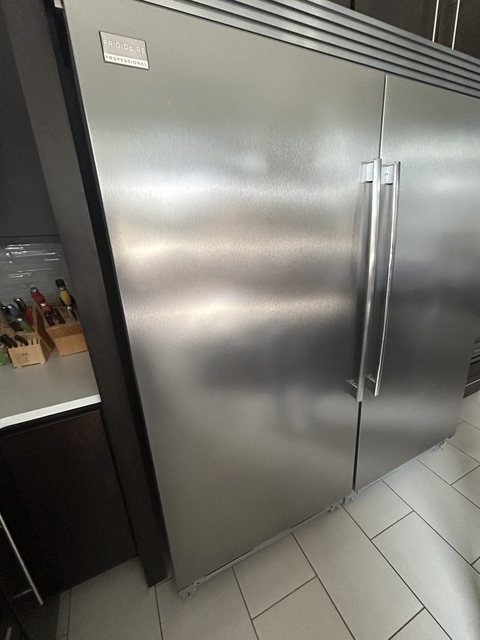
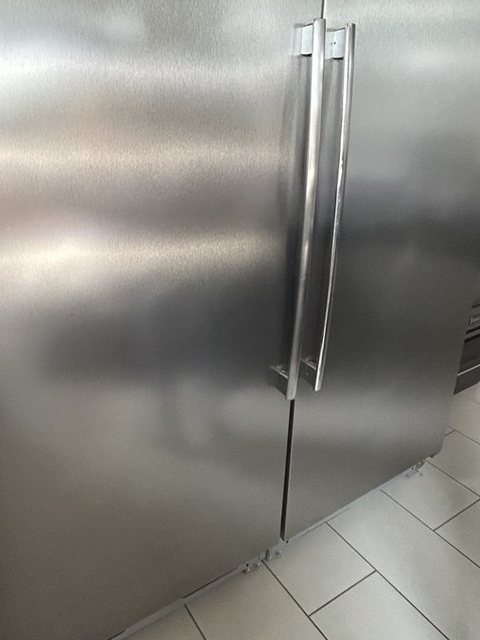
Older units in unair-conditioned kitchens running warm through August; defrost heaters and condenser fans; a used side-by-side in a rental that arrived with someone else’s problem
Washers
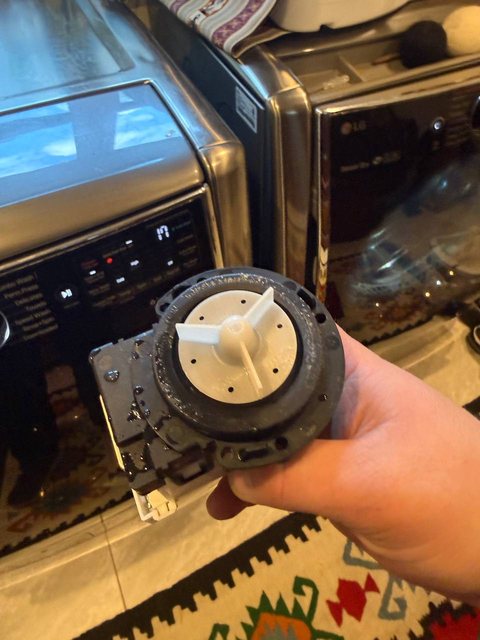
Top-loads on a back-porch hookup with a drain hose into a laundry sink; lid locks, drain pumps, couplers; hoses that split because nobody looked at them in a decade
Dryers
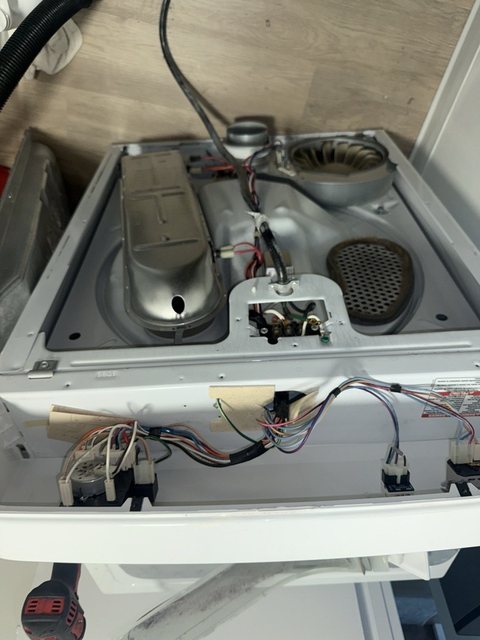
Vents through a crawl space or up a brick wall, packed with lint; thermal fuses; one dead 240-volt leg from an old outlet; gas dryers with tired igniters
Dishwashers
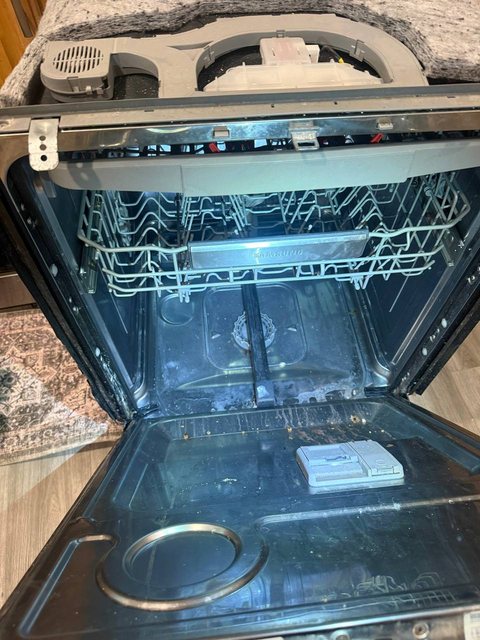
Hard water scale on elements and spray arms in houses without softeners; retrofit units squeezed into 1940s cabinets; drain hoses with no high loop
Ovens & ranges
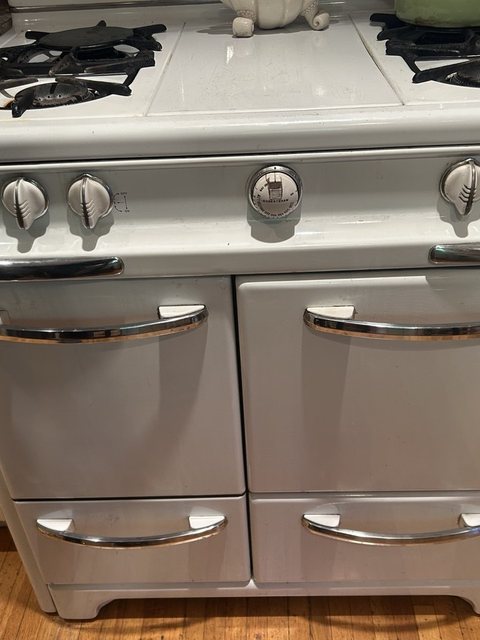
Electric coil ranges from the seventies with burnt terminal blocks; gas ranges with weak igniters; wall ovens in the ranches with dead bake elements
Ice makers
Scale from unsoftened city water closing the fill valve; makers in refrigerators that sat in storage before a tenant moved in
Dryer
Dryer · NNU rental
A landlord texts from out of town: tenant on Dewey Ave says the dryer runs but nothing dries. The vent runs up through an old chimney chase and out the roof. We meter a blown thermal fuse, clear a bird’s worth of lint from the chase, replace the fuse, and email the owner a photo of the vent and the invoice for text approval.
Fridge
Fridge · historic district
A 1920s bungalow near Lloyd Square, no air conditioning, a French door in a kitchen that reads 88°F by mid-afternoon. The freezer is fine, the top box is at 50°F. Evaporator frozen solid, defrost heater open on the meter. Thawed, heater replaced from the truck, shelves back at 38°F before dinner.
Washer
Washer · back porch hookup
A 1950s ranch on a numbered street with the washer on an enclosed porch. Standing water after every load. The drain pump is fine; the hose into the laundry sink has collapsed where the porch freezes each winter. New hose, pump metered anyway, a full cycle run to prove it.
Range
Range · 12th Avenue corridor
An electric range in a small apartment kitchen, one burner dead and the oven light flickering. The terminal block at the back is scorched from a loose connection. We replace the block, meter the elements, and note for the tenant that the outlet behind it needs an electrician’s eye.
How quickly can you reach a downtown Nampa address?
Faster than anywhere else we go. The shop is on Davis Ave, so downtown calls fill the first stops of the day and the gaps between runs. A warm refrigerator called before noon is seen the same day. The rest lands inside the week, and next morning is common.
I own a rental near NNU and live elsewhere. What does the visit look like?
The tenant lets us in or gives a code, you approve the written repair by text, and your email receives the photo along with the invoice and warranty. Tell dispatch about dogs and gates in the request. Nothing happens past the $99 diagnostic until you say yes.
Do you work on old appliances in the historic district houses?
Yes, as long as parts exist. A 1990s Whirlpool or GE range or a Kenmore dryer is usually repairable and worth it. When a part has been discontinued we tell you at the diagnostic, and you are out $99, not a guess. The written price only comes when we can actually do the job.
What does a downtown Nampa repair cost?
Diagnosis runs $99, and approving the repair number folds that $99 into it. Driving across town adds no trip charge, and returning with an ordered part adds none either. The repair is priced after the meter work, on paper, with the warranty term on the same invoice.
The phone is quicker; the form lands on the same desk. Both get you a text with a window, and until a technician has had a meter on the machine the only figure anyone quotes is $99.
Window texted to you; the technician will call if you would rather talk
$99 buys the meter reading and the diagnosis — no money before that
The repair as one written figure, $99 folded in
Warranty term printed on the invoice
How a visit runs
Four steps, and no step five on the invoice
1
Window
Ring the shop or fill in the form; dispatch answers with a window, and a text follows as the truck pulls off Davis Ave — first stops go to the Boise commuters, Saturday mornings to everyone else.
2
Meter
Measurements come before opinions: amps at the compressor, degrees on the shelf, ohms across the element. The failed part gets its everyday name from the technician, who then writes the repair as a single figure, $99 folded in.
3
Part
The shelves on the truck hold what this valley wears out — inlet valves, defrost heaters, heating elements, igniters, drain pumps, rollers. When something must be ordered, the return trip happens on our calendar and the figure you approved stands.
4
Proof
The machine runs a whole cycle while you watch, panels and floor go back the way they were, and the invoice that reaches your email carries the warranty term.
Downtown Nampa: call the shop.
Home base — the truck loads a few blocks over. $99 for the meter, the repair as one figure on paper, warranty term printed on the invoice.