Your Whirlpool washer stopped with F8 E1 or Ld on the display and a tub full of water. The code narrows the search; the meter finishes it.
Monday–Friday 7:30–5:30 · Saturday 8–1 · closed Sunday

Refrigerator & Freezer Repair$99 with a meter · rides inside the repair
Washing Machine Repair$99 with a meter · rides inside the repair
Clothes Dryer Repair$99 with a meter · rides inside the repair
Dishwasher Repair$99 with a meter · rides inside the repair
Range, Oven & Cooktop Repair$99 with a meter · rides inside the repair
Ice Maker Repair$99 with a meter · rides inside the repair
Whirlpool is the washer most often waiting in a house built between 2015 and 2025 in North Nampa, Kuna or the west side of Meridian, because the builder packages lean on the brand. Top-load Cabrio models with the glass lid, front-load Duet pairs stacked in a closet, and the agitator machines in the older ranches off Midland Blvd all report faults the same way: an F number for the system and an E number for the detail, or a two-letter word like Ld or Sd on older displays. The pairing tells you where the board gave up, not why. F9 E1 covers everything from a sock in the pump to a drain hose shoved too far down the standpipe.
The water around here is a second suspect on every call. Nampa and Caldwell city supply is hard; once the softener salt bin sits empty for a few weeks, scale closes the inlet valve screens until the fill runs long and F8 E1 posts. Out on the wells south of Lake Lowell, along Deer Flat Rd and toward Melba, sand rides in with the water and settles in the drain pump. Then there is the load itself: work clothes off a dairy or a hop yard in Wilder shed grit and baling twine that a pump impeller does not forgive. Second-floor laundries in the two-story houses off Amity Rd add a long drain lift that a tired pump cannot manage.
| Code | What the display means | Usually behind it | Safe to check first | What we do |
|---|---|---|---|---|
| F5 E2 | The cycle asked for a lock and the door or lid never confirmed one. | A lid or door not shut against the strike, then the lock assembly, then the wiring to it. | Open the door, take out anything caught at the seal, close it firmly and restart the cycle. | We meter the lock switch and solenoid, check the strike alignment, and put in a new lock assembly when the old one fails the test. |
| F8 E1 | The washer did not reach its fill level in the time allowed. | Both supply taps not fully open, then clogged inlet screens from scale, then the inlet valve, then the pressure hose. | Turn both taps behind the washer fully on and check that the fill hoses are not kinked against the wall. | We measure fill flow, clean the scale off the inlet screens or fit new ones, put the meter on each valve coil, and swap the valve when a coil measures open. |
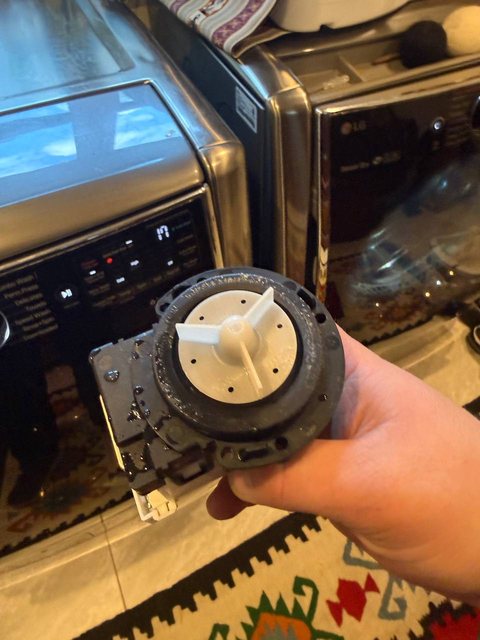
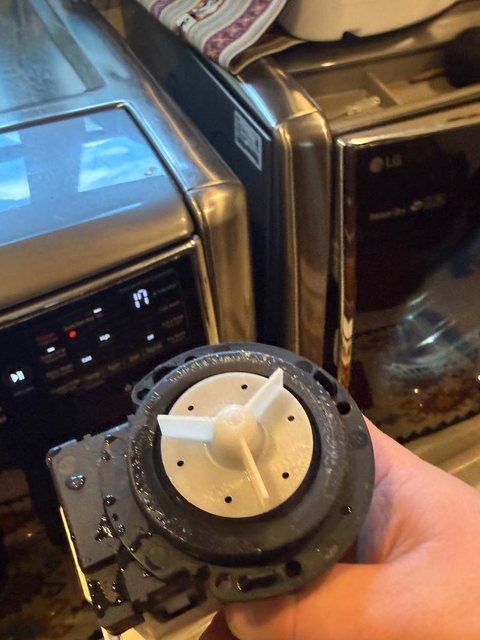
| F9 E1 | Draining took too long. | A clogged drain pump filter or a sock at the impeller, then a kink in the drain hose or a hose run too far down the standpipe, then the pump motor. | On a front-loader, open the small door at the bottom front and empty the drain filter into a pan. Expect water. | We pull the pump, clear the impeller of grit and sand, put the meter on the windings, and swap in a new pump when it hums but will not move water. |
| F7 E1 | The motor is not turning the basket at the speed the board asked for. | An overloaded or off-balance drum, then the speed sensor on the motor, then the drive motor or its control board. | Take out half the load, spread the rest around the basket and run a rinse and spin. | We spin the basket by hand for drag, meter the motor and its speed sensor, and replace the sensor, motor or board that failed. |
| F0 E2 | Too many suds. The washer is rinsing them down before it goes on. | An overdose of detergent, or regular soap in an HE front-loader, then a drain that is only half open. | Run an empty hot cycle with no detergent and use the measuring line next time. Soft water needs less soap. | We check the drain path and pump for a restriction that holds suds in the tub, and confirm the pressure sensor reads true. |
| F1 E1 | The main control board detected a fault in itself. | A power surge or brownout, then the board, then a shorted component the board feeds. | Unplug the washer for two minutes and try a short cycle. | We test the board outputs with a meter, check the parts it powers for a short, and replace the board when it fails on its own. |
| F3 E1 | The water level sensor is reading something impossible. | A pinched or cracked pressure hose, then a sensor clogged with lint and scale, then the sensor itself. | Unplug for two minutes and restart. If the washer overfills or will not fill, stop and leave it off. | We check the pressure hose and dome for blockage, test the sensor against a known water level, and replace the sensor or hose. |
| LF | Long fill: the tub did not fill in time on an older Whirlpool. | Taps not fully open, then scaled inlet screens, then a weak inlet valve, then low pressure on a well. | Check both taps and both hoses. A hose with a bulge or a kink counts. | We measure flow at the valve, clean the screens, and replace the inlet valve when a coil measures open or the valve dribbles. |
| Ld | Long drain on an older top-loader. | Lint, coins and grit at the pump, then a drain hose sitting too low in the standpipe, then a failing pump. | Pull the drain hose out of the standpipe to about eight inches deep and make sure it is not underwater. | We clear the pump, meter its motor, and replace the pump if the impeller has broken loose or the motor is open. |
| oL | Overloaded: the basket cannot move freely. | Too many towels, then an item caught between basket and tub, then a worn suspension rod or the drive hub. | Take out a third of the load and run a drain and spin. | We check the basket for drag and for anything wedged below it, test the suspension, and replace rods or the hub as the test shows. |
| Sd | Suds detected during the cycle. | Too much detergent or the wrong kind, then a slow drain that traps foam, then a pressure sensor confused by foam. | Skip the detergent for one hot cycle and cut the dose by half after that. | We check the pump and drain path for a restriction and test the pressure sensor, then set the machine to run a clean cycle. |
| dL | The door would not lock on a Duet front-loader. | Laundry at the seal, then the door lock assembly, then the strike out of line, then the board relay. | Push the door shut hard enough to hear the click and try again with nothing at the gasket. | We meter the lock, check the strike, and replace the door lock assembly or adjust the hinge when the door has dropped. |
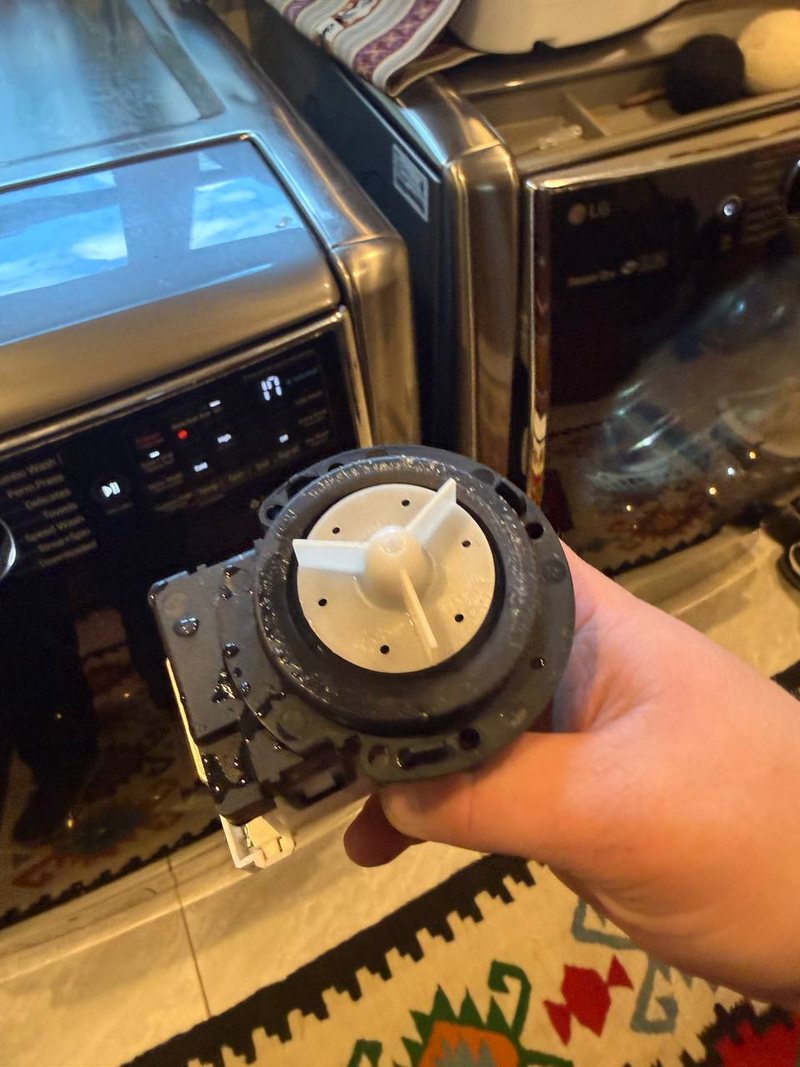
A Whirlpool washer stores its last several faults in the board, so we read them before touching anything and note the order. Then we clear them and run the diagnostic cycle, which fills, agitates, drains and spins in short steps while we watch the readings. That is when the code proves or disproves itself. A drain code gets the pump filter opened and, more often than not in South Nampa or Kuna, a spoonful of well sand comes out with the lint. A lock code gets the switch metered with the door shut and open. A motor code gets the basket turned by hand before the meter goes on the windings, because a broken suspension rod posts the same fault as a dead motor.
Syringa is an independent shop and not Whirlpool’s dealer; we repair the machine, we do not sell the brand. When a washer is young enough that Whirlpool’s own coverage could still be in play, that comes up before the work starts and the road you take is your call. Drain pumps, inlet valves, lid and door locks, pressure sensors and suspension rods for the common models ride along on the truck. Main boards and motor controls are ordered, and the return trip rides on the number you already approved. One figure goes on paper once the diagnostic is done; approve it and the $99 you already owe simply merges into that total. Would you rather buy a new washer instead? Then $99 is all we charge.
Not always. On the wells south of Kuna the pump fills with sand and grit until it cannot keep up, and clearing it is the repair. The same code shows when the standpipe has swallowed too much of the drain hose. We open the pump, clear it, meter the motor and only then decide whether a new pump is on the invoice.
The washer timed out waiting to fill. Let the softener go without salt for a while and scale starts plugging the little screens in the inlet valve. The taps are the first check; the screens are the second. We measure the flow, clean or replace the screens, and replace the valve if a coil has failed.
Most codes clear with a two-minute unplug and one careful cycle. A lock code or a suds code usually stays gone if the cause was the load or the detergent. A fill, drain or motor code that returns on the next cycle is a part. If water is on the floor, leave the machine off and call.
Yes. Caldwell, Middleton, Melba, Notus, Greenleaf, Wilder and Parma are all on the route out of Nampa, along with Kuna, Star, South Meridian, Marsing and Homedale. No mileage charge anywhere on that list, and a second-floor laundry in a Middleton two-story is not extra.
Front-loaders and the newer low-water top-loaders need far less soap than the agitator machine they replaced, and softened Nampa water needs less still. The board sees foam through the pressure sensor and stalls. Cut the dose to the lowest line. If the code keeps coming, we check for a drain restriction that holds the suds in.

Plain meaning of each code, what tends to be behind it here, one check you can make, then our part
Open the code list →
Plain meaning of each code, what tends to be behind it here, one check you can make, then our part
Open the code list →
Plain meaning of each code, what tends to be behind it here, one check you can make, then our part
Open the code list →The phone is quicker; the form lands on the same desk. Both get you a text with a window, and until a technician has had a meter on the machine the only figure anyone quotes is $99.
Open the request formRing the shop or fill in the form; dispatch answers with a window, and a text follows as the truck pulls off Davis Ave — first stops go to the Boise commuters, Saturday mornings to everyone else.
Measurements come before opinions: amps at the compressor, degrees on the shelf, ohms across the element. The failed part gets its everyday name from the technician, who then writes the repair as a single figure, $99 folded in.
The shelves on the truck hold what this valley wears out — inlet valves, defrost heaters, heating elements, igniters, drain pumps, rollers. When something must be ordered, the return trip happens on our calendar and the figure you approved stands.
The machine runs a whole cycle while you watch, panels and floor go back the way they were, and the invoice that reaches your email carries the warranty term.
$99 puts a meter on the machine. The repair goes on the ticket as one figure with that $99 inside it, the part is usually riding in the truck, and the invoice states the warranty term. Parma pays what Davis Ave pays.