Standing water, a lid locked shut, a front-loader leaking at the door: washer repair in Nampa gets a meter on the pump and the motor before anyone guesses.
$99 to diagnose — folded into the repair once you say yesON THE TRUCK Drain, spin and leak calls same weekTODAY a warm refrigerator reported before noon jumps the line
Washer calls come in two shapes. In the 2015-and-newer subdivisions off Ustick Rd, Cherry Ln and Middleton Rd, and in the two-story houses in South Meridian with the laundry upstairs, it is a front-load or a stacked pair from a builder package, five to ten years in and starting to throw codes. Out on the acreage past Lake Lowell, in Melba, Wilder and Marsing, it is a top-load Whirlpool, Maytag or Speed Queen on a concrete floor in a mudroom, fed by a well. The shop on Davis Ave sits in the middle, and the route runs I-84 to Caldwell and Middleton, Hwy 45 south, Hwy 55 west over the Snake.
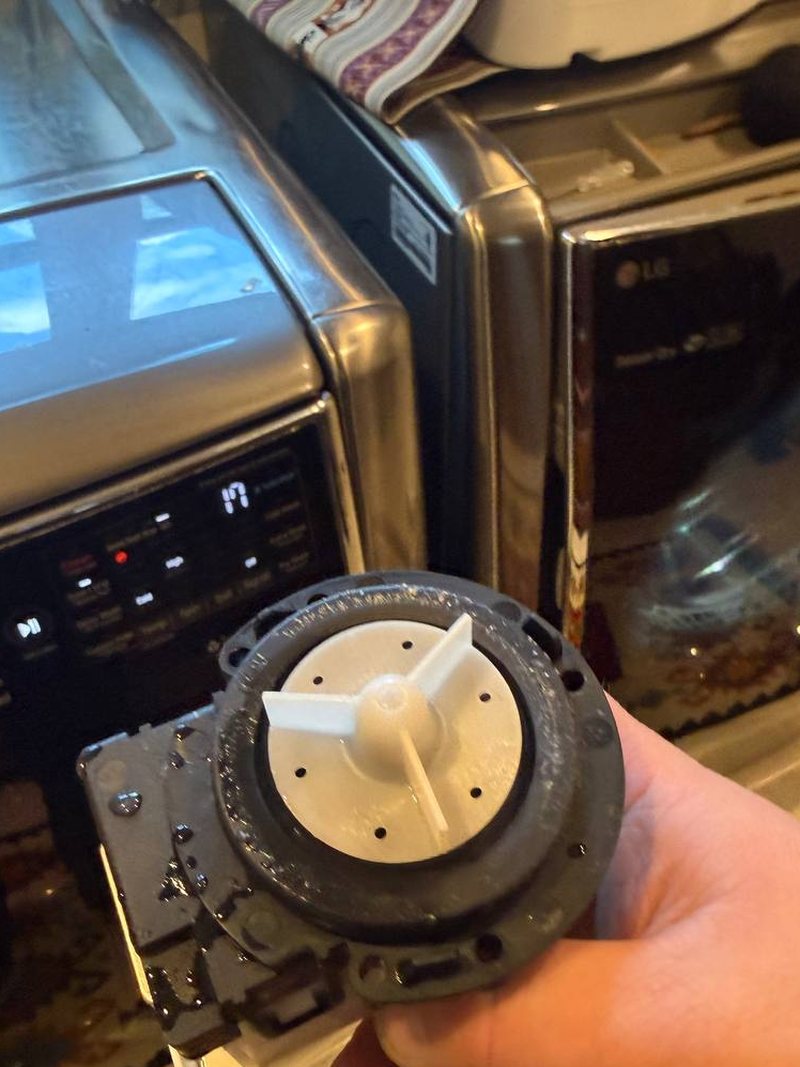
The well water matters more to washers than people expect. Iron and sand pack the screens inside the inlet valve, so a machine in Parma fills far too long and times out with a fill error, and the orange staining on the whites is a separate complaint with the same cause. In town the water is hard but clean, and the failures are mechanical: a drain pump stalled on a sock, a lid lock that will not latch, a bearing that turns the spin cycle into a jet engine. A common scene in North Nampa is a front-loader that stops at eleven on the countdown with water still in the drum. That is almost always the pump.
Where each washer symptom usually leads
Washes, then quits with the tub still full
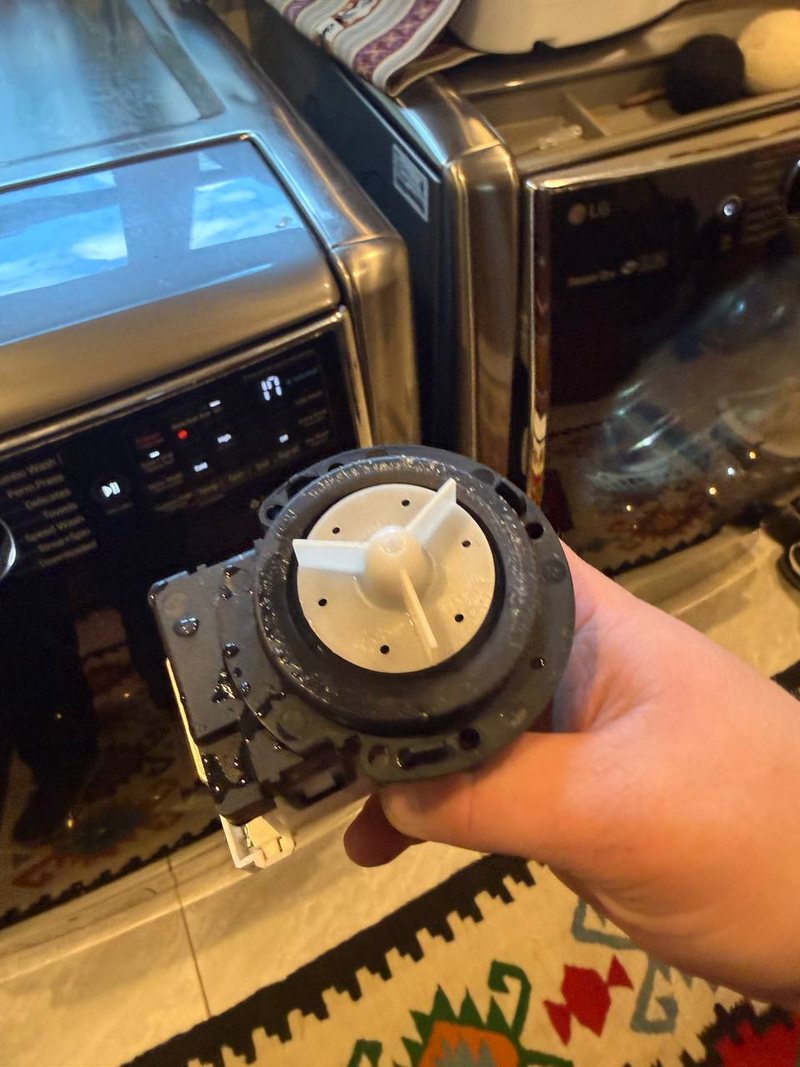
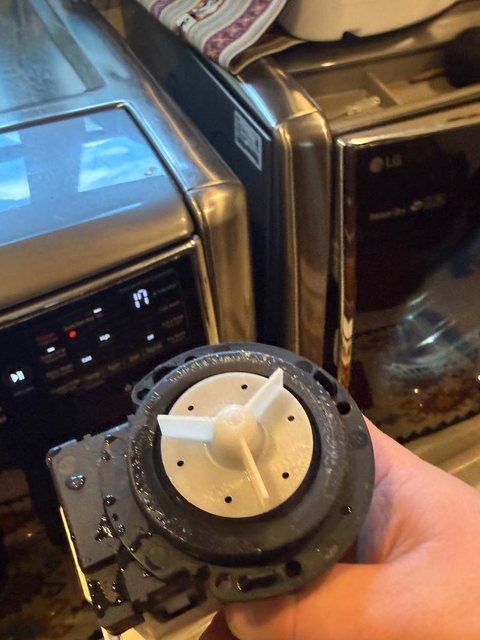
The drain pump has either jammed or died. Behind the filter or inside the pump housing there is usually a bra wire, a hair tie or a sock; when the impeller turns freely but the motor stays silent, we meter the winding and a replacement pump comes off the truck. The drain hose gets checked for a kink.
Drum will not spin, motor hums or nothing
Top-loaders: the lid switch or lock, a drive belt gone slack, or the coupler between motor and transmission stripped. Front-loaders: the door lock, carbon brushes, or the motor control board. Switch and motor both get a reading and the part is named before any board is touched.
Leaks at the front, the back or under the machine
A front-load leak at the door is a torn or dirty boot; at the back it is a fill hose or the inlet valve seeping; underneath it is the tub itself cracked, or the seal on the pump. With a light under the machine we fill and spin it, and follow the drip back to where it starts.
Loud spin, banging, the whole machine walks
Banging on spin means an unbalanced load, top-load suspension rods that have gone soft, or front-load shocks that have quit. A roar that rises with speed is a tub bearing. We check the suspension and turn the drum by hand; a bad bearing is discussed plainly, since on some models it is the whole tub.
Well water: slow fill, then a fill error
Scale, iron and sand collect in the inlet screens and inside the valve. Cleaning the screens comes first; the valve solenoids get metered next, and a valve that clicks but passes a trickle is replaced. On Melba and Marsing wells this comes back every few years, and we say so.
Smells bad, mold on the door boot, clothes come out dirty
A front-loader that sits shut between loads grows a film in the boot and the drain path. The boot gets cleaned or swapped, the pump filter and drain hose cleared, and we check that hot water actually arrives, since a stuck cold valve leaves detergent behind. Then a hot cycle to prove it.
How the visit runs
Drain pump, motor and lid lock get metered ahead of any part being named
The repair figure written once, $99 diagnostic forming part of it
Pumps, lid locks, belts and inlet valves ride on the truck
Return visit for an ordered part, same number, no extra trip line
Full wash and spin cycle run and the floor left dry
Washer repair in Nampa, from the meter to the invoice
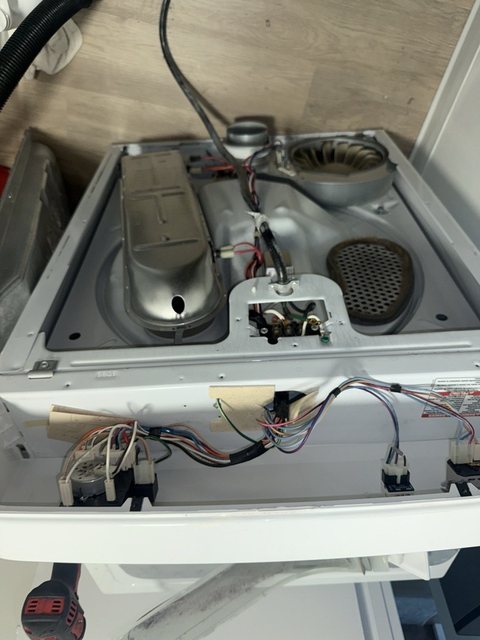
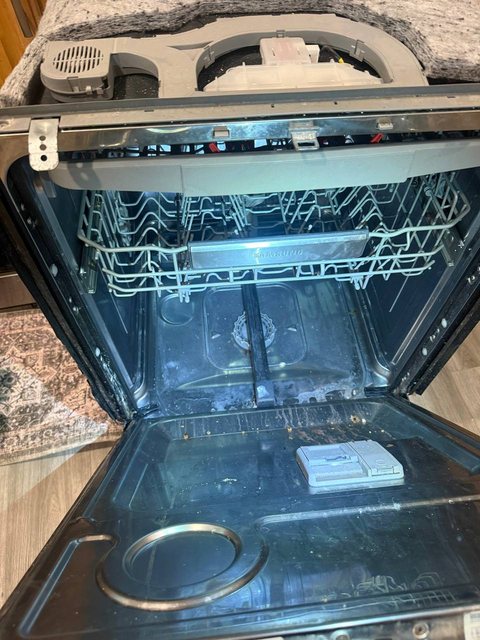
Diagnosing a washer means running it briefly with the panels removed. The technician fills the tub and watches the inlet valve, listens to the pump on drain, and puts a meter on the motor and the lock when the drum should turn and does not. Front-loaders keep an error history on the control board; we read it, clear it and reproduce the fault, because a stored code names a circuit, and the failed part is not always the one at the end of it. Top-loaders get the drum turned by hand for bearing noise and the suspension checked for sag. When the cause is found, you hear it in plain words with one number written under it.
Top-loaders from Whirlpool, Maytag, Kenmore and Amana, Speed Queen where people bought the good one, and the front-load LG, Samsung, GE, Electrolux and Frigidaire machines the builder supplied are all regular work. Many Nampa washers live in rentals near NNU or in a Middleton house whose owner is on I-84 to Boise by seven. We work around that: early stops before the commute, a tenant at the door, a photo and a text for the owner to approve, invoice and warranty by email. Whoever pays, the rule is the same. No figure gets written until the meter work is done, and once you approve, the $99 you paid for the answer is already sitting inside that figure.
Washer repair in Nampa and across Canyon County gets its figure in writing after the $99 diagnosis. Green-light the repair and the $99 forms part of that figure; wave it off and the bill stops at $99. Request service →
Asked in Nampa & Canyon County
How fast can a Nampa washer repair be scheduled?
A washer call usually gets a slot inside the week, and the next morning is common. Closet-stacked pairs and second-floor laundries in South Meridian take no longer; tell the dispatcher what is above and below it so the right dolly and drain pan come along.
My front-loader in Nampa stops with water in the drum. Is that the pump?
Usually. The pump either has something in it or the motor has quit, and either way the cycle times out on drain. Pull the lower filter if your machine has one and empty it; if that does not fix it, the pump gets metered and replaced from the truck.
Does well water in Melba or Wilder shorten a washer’s life?
It works on the inlet valve and the screens, and iron leaves rust marks on the tub and the laundry. The rest of the machine is indifferent to it. A valve replacement and clean screens fix the fill problem; putting a sediment filter upstream of the washer keeps it from returning so soon.
Is a washer with a bad tub bearing worth fixing?
It depends on the model. On some front-loaders the bearing comes as a whole outer tub and the labor is long; on many top-loaders it is a reasonable job. We tell you which you have and put the number in writing so you can compare it against a new machine without pressure.
For a Canyon County washer call, what is included in the $99?
The drive out, the meter work, a test cycle and a plain-words account of what failed. Say yes, and the written figure already accounts for the $99. Say no, and $99 is the complete charge; the machine goes back together the way we found it.
The phone is quicker; the form lands on the same desk. Both get you a text with a window, and until a technician has had a meter on the machine the only figure anyone quotes is $99.
Window texted to you; the technician will call if you would rather talk
$99 buys the meter reading and the diagnosis — no money before that
The repair as one written figure, $99 folded in
Warranty term printed on the invoice
How a visit runs
Four steps, and no step five on the invoice
1
Window
Ring the shop or fill in the form; dispatch answers with a window, and a text follows as the truck pulls off Davis Ave — first stops go to the Boise commuters, Saturday mornings to everyone else.
2
Meter
Measurements come before opinions: amps at the compressor, degrees on the shelf, ohms across the element. The failed part gets its everyday name from the technician, who then writes the repair as a single figure, $99 folded in.
3
Part
The shelves on the truck hold what this valley wears out — inlet valves, defrost heaters, heating elements, igniters, drain pumps, rollers. When something must be ordered, the return trip happens on our calendar and the figure you approved stands.
4
Proof
The machine runs a whole cycle while you watch, panels and floor go back the way they were, and the invoice that reaches your email carries the warranty term.
Washers in Nampa and Canyon County — one written number, fixed once.
$99 puts a meter on the machine. The repair goes on the ticket as one figure with that $99 inside it, the part is usually riding in the truck, and the invoice states the warranty term. Parma pays what Davis Ave pays.