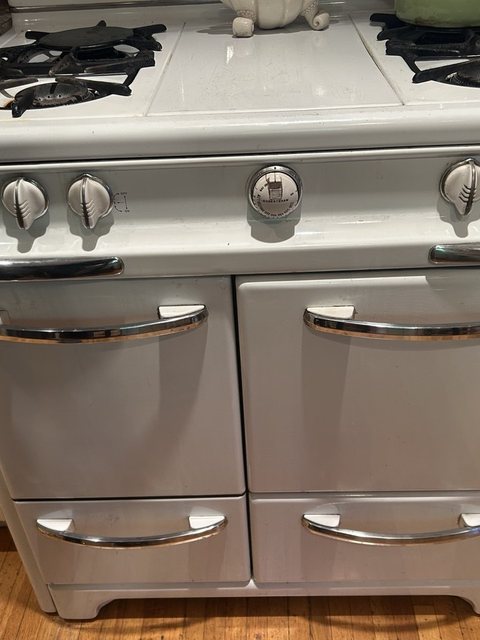
Your GE oven beeped, quit heating and left an F code where the temperature should be. Each code is a check the control failed, not a part number.
Monday–Friday 7:30–5:30 · Saturday 8–1 · closed Sunday

Refrigerator & Freezer Repair$99 with a meter · rides inside the repair
Washing Machine Repair$99 with a meter · rides inside the repair
Clothes Dryer Repair$99 with a meter · rides inside the repair
Dishwasher Repair$99 with a meter · rides inside the repair
Range, Oven & Cooktop Repair$99 with a meter · rides inside the repair
Ice Maker Repair$99 with a meter · rides inside the repair
GE ranges are what the builders installed in most of the houses around Middleton, along Can-Ada Rd and south of Kuna, a freestanding electric with a glass top or a gas model where Intermountain Gas runs. Older GE and Hotpoint ranges cook in the 1950s ranches off Northside Blvd, and GE wall ovens sit in remodeled kitchens near the College of Idaho. All share one habit: when a reading goes wrong, the control beeps, stops the oven and posts an F code on the clock. The code names the check that failed, whether the oven sensor, the door lock, a stuck key or the control itself. It does not say which part in that circuit did it.
Local conditions shape which codes show up. A self-clean cycle run on a July evening in a South Nampa kitchen that is 85 degrees pushes the control past its own temperature limit, and F2 or a lock code follows. Dust from the fields around Melba and Marsing and grease from a year of frying settle into the keypad ribbon until a key reads stuck and F0 or F7 appears with nobody touching the panel. Summer thunderstorm outages along Hwy 45 leave F1 or F5 on a control that was fine. Propane conversions on the acreage do not post codes at all; they burn yellow and soot the pans, and that is a burner job, not a display job.
| Code | What the display means | Usually behind it | Safe to check first | What we do |
|---|---|---|---|---|
| F0 | A key on the touch pad is reading pressed all the time. | Grease or a spill under the keypad, then a membrane key that will not release, then the control board input. | Wipe the whole panel dry, press each key once, then switch the range breaker off for two minutes and back on. | We test each key at the control, clean or replace the keypad, and replace the control board when a key reads closed at the board with the pad unplugged. |
| F1 | Either the keypad circuit or the control itself failed a self-check. | A stuck key or a wet ribbon connector, then the control board after a surge, then a shorted relay. | Switch the range breaker off for two minutes. If F1 returns with nothing pressed, leave the oven off until we look. | We separate keypad from control, test each side, and replace the pad or the electronic range control that fails on clean power. |
| F2 | Oven temperature climbed past the ceiling the control permits. | A self-clean run in a hot kitchen, then the oven temperature sensor reading low, then a bake or broil relay stuck closed on the board. | Let the oven cool fully, then set bake at 350 and watch an oven thermometer for twenty minutes. | We meter the sensor against its chart, watch the element relays with a meter under load, and replace the sensor or the control with the stuck relay. |
| F3 | No signal is coming back from the oven sensor; its circuit reads open. | The sensor probe at the back wall of the oven, then its plug behind the oven, then the harness to the control. | Switch the breaker off for two minutes. F3 returning on a cold oven is a sensor or a connection, not a glitch. | We meter the sensor at room temperature against the chart, check the plug for a corroded pin, then fit a new probe or fix the wiring. |
| F4 | The sensor circuit for the oven cavity reads shorted. | The sensor, then a harness pinched behind the oven when it was pushed against the wall, then the control. | Two minutes off at the breaker, then try bake. Do not run self-clean until the code is gone. | We check the sensor and harness with a meter, release the pinched wire or replace the sensor, and test the control input. |
| F5 | The control lost track of its own program. | A power surge or brownout, then a failing control board, then a loose ground at the range. | Cut the range breaker for two minutes and set the clock again. A one-time F5 after a storm is common. | We check incoming voltage and the ground, then test the electronic range control and replace it when F5 returns on good power. |
| F7 | A key has been held down for more than a minute. | Something leaning on the panel, then a spill wicked under the keypad, then a membrane key that has failed closed. | Move anything touching the panel, wipe it down, and cut the breaker for two minutes. | We test the keypad matrix at the control and replace the touch pad or the control when a key stays closed on its own. |
| F9 | The door lock did not reach the position the control asked for during self-clean. | A latch jammed by a rack or a warped door, then the lock motor, then the lock switch. | Let the oven cool completely, then check that nothing is caught in the door and that the door closes flat against the frame. | We run the lock motor from the control, meter the motor and the lock switch, and replace the latch assembly or switch that fails. |
| FC | The lock switch or lock motor circuit has failed. | The lock switch, then the lock motor, then the harness or control output. | Wait for the oven to cool, cut the breaker for two minutes, and see whether the latch releases when power returns. | We meter the lock switch in both positions and the motor under power, then replace the switch, motor or latch assembly. |
| FF | The control lost the door lock motor safety circuit. | The lock motor, then the safety switch in the latch, then the harness or the control. | Cut the breaker for two minutes with the oven cold. If the door is locked, do not force it. | We test the latch motor and its safety switch, trace the circuit to the control, and replace the part that reads open. |
| F96 | The cooling or convection fan is not turning at the speed the control expects. | Grease and dust binding the fan, then the fan motor, then the fan speed sensor or control output. | With the oven off, listen for the cooling fan running after a bake. Silence means the fan, not the sensor. | We meter the fan motor and its speed signal, clear grease from the fan, and replace the motor or its sensor when it will not come up to speed. |
| F30 | On newer GE ranges, the oven sensor reads open or out of range. | The oven temperature sensor, then its connector behind the back panel, then the control. | Switch the breaker off for two minutes. If F30 comes back cold, the oven should stay off until it is metered. | We meter the sensor against the chart at room temperature, check the connector, and either swap the sensor or mend the harness. |
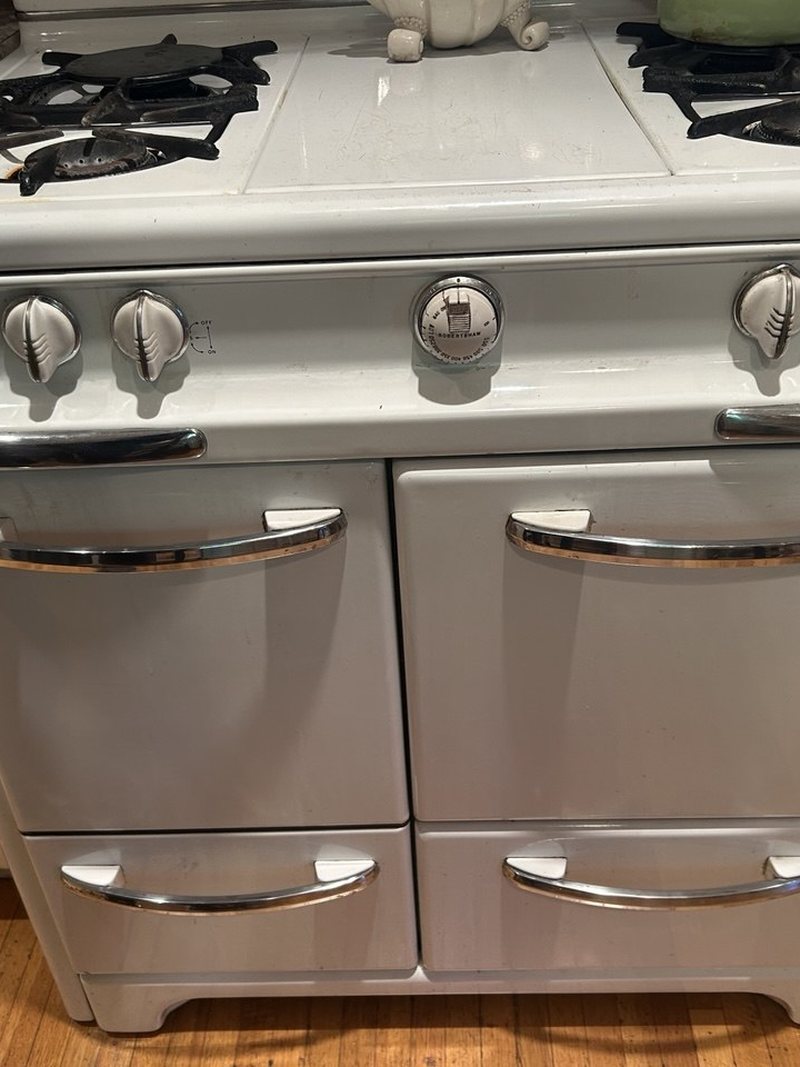
An F code on a GE range starts the diagnosis; it does not end it. We note the code, clear the control, and set the oven to bake so the fault can return with a thermometer on the rack. Then the meter goes on the circuit the code names. A sensor code gets the probe measured against its chart, and the plug behind the oven checked, since a green pin there posts F3 too. A lock code gets the latch motor run from the control and the switch metered in both positions. A stuck-key code gets the keypad unplugged to show whether the pad or the control is holding the key. On gas models the igniter is metered under load, since a weak igniter cooks slow and posts nothing.
Syringa works independently. We are not GE’s dealer, and we sell no ranges; we repair the one in your kitchen. Should the range be recent enough that GE’s own coverage could still cover the fault, that gets mentioned before anyone spends $99, and you decide. Bake elements, broil elements, igniters, oven probes, lock switches and the common latch assemblies ride on the truck, so most F3, F4, F9 and F30 calls close the same visit. Electronic range controls and keypads are ordered by model and fitted on the return trip with no second fee. Once the meter has spoken you get a single figure, written down; approve it and that figure has already absorbed the $99. Turn it down and your invoice reads $99, nothing more.
On most GE ranges the cooktop works while the oven is locked out, so yes for the burners. F3 means the oven sensor circuit reads open, and in the Middleton subdivisions it is usually the probe or a corroded pin at its plug behind the oven. Try two minutes off at the breaker once; if it returns, we meter the sensor and bring the part on the truck.
Self-clean pushes the oven near its limit, and a kitchen already at 85 degrees in a Nampa July leaves the control no margin. F2 says the oven read too hot. Let it cool, then bake at 350 with a thermometer. If it holds temperature, the sensor and relays are fine and the answer is to run self-clean on a cool morning. If not, we meter the sensor and relays.
Yes, all three live in the door lock circuit. F9 is the latch not reaching the position the control asked for, FC is the lock switch or motor circuit failing, and FF is the control losing the motor’s safety circuit. Never force a locked door. We run the motor from the control, meter the switch and replace the latch assembly or the switch that failed.
Yes. Propane ranges around Melba, Marsing and the Sunnyslope bench get the same code-led diagnosis, and we also look at the burner flame, since a bad conversion burns yellow and soots pans without posting anything on the display. The gas side of the range is our work, not a homeowner check. No mileage line on the invoice for the drive.
No. F1 covers the keypad circuit as well as the control, and a spill under the touch pad or a wet ribbon connector posts it as readily as a failed board. We unplug the keypad from the control and test each side before naming the part. Only when the control fails on clean power with the pad disconnected does the board go on the invoice.

Plain meaning of each code, what tends to be behind it here, one check you can make, then our part
Open the code list →
Plain meaning of each code, what tends to be behind it here, one check you can make, then our part
Open the code list →
Plain meaning of each code, what tends to be behind it here, one check you can make, then our part
Open the code list →The phone is quicker; the form lands on the same desk. Both get you a text with a window, and until a technician has had a meter on the machine the only figure anyone quotes is $99.
Open the request formRing the shop or fill in the form; dispatch answers with a window, and a text follows as the truck pulls off Davis Ave — first stops go to the Boise commuters, Saturday mornings to everyone else.
Measurements come before opinions: amps at the compressor, degrees on the shelf, ohms across the element. The failed part gets its everyday name from the technician, who then writes the repair as a single figure, $99 folded in.
The shelves on the truck hold what this valley wears out — inlet valves, defrost heaters, heating elements, igniters, drain pumps, rollers. When something must be ordered, the return trip happens on our calendar and the figure you approved stands.
The machine runs a whole cycle while you watch, panels and floor go back the way they were, and the invoice that reaches your email carries the warranty term.
$99 puts a meter on the machine. The repair goes on the ticket as one figure with that $99 inside it, the part is usually riding in the truck, and the invoice states the warranty term. Parma pays what Davis Ave pays.