Ovens, ranges & cooktops · gas and electric · Downtown Nampa
Oven and range repair in Downtown Nampa, where the shop is
An oven that shuts off halfway through a roast, a burner that sparks and never lights, a bake element with a glowing spot: oven and range repair in downtown Nampa meters the igniter or the element before naming anything.
$99 to diagnose — folded into the repair once you say yesON THE TRUCK Igniters, elements and sensors on the truckHOME BASE the truck loads a few blocks over on Davis Ave
Ranges in the historic district and the NNU blocks
Ovens, ranges & cooktops · Downtown Nampa
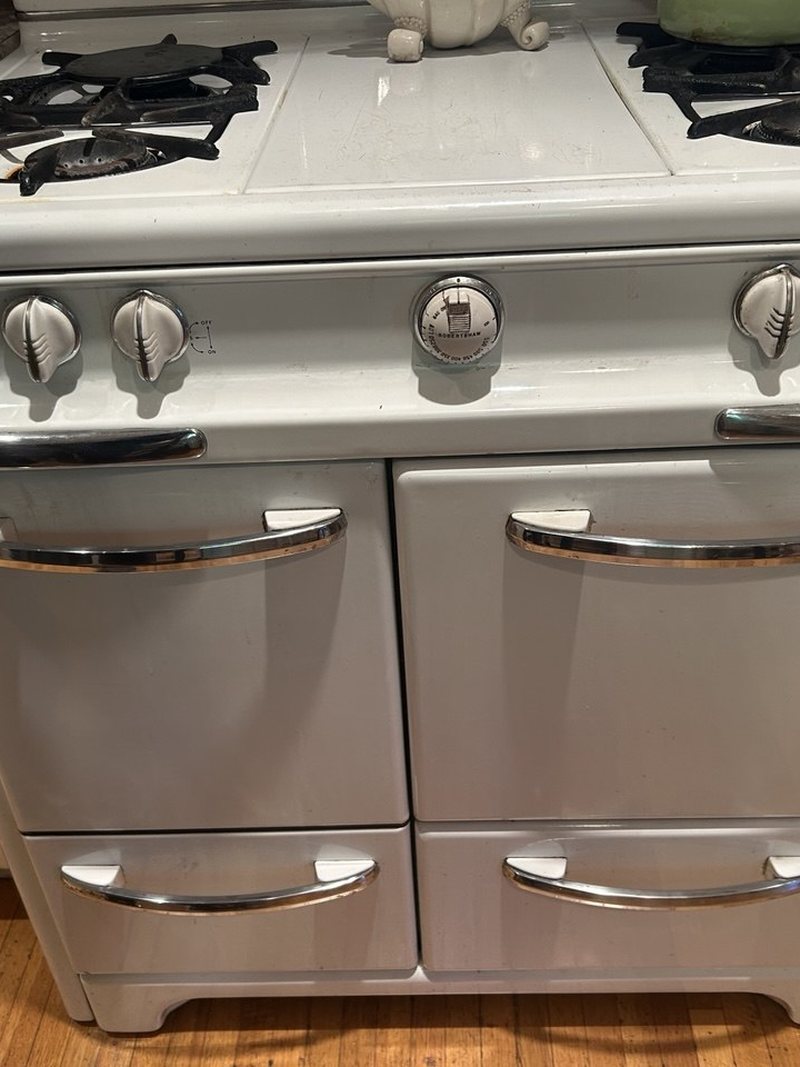
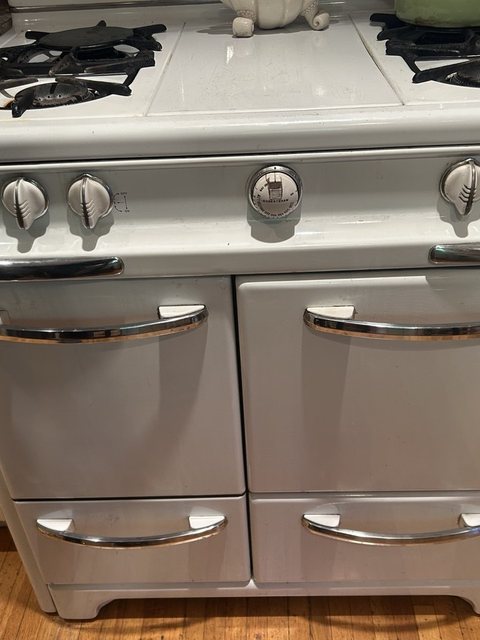
The kitchens in the 1900s–1940s houses around 1st St S, Front St and Lakeview Park are small, and the range in them is a 30-inch freestanding unit that has to do everything. In the bungalows that were kept up it is a gas range on Intermountain Gas. In the NNU rentals along Holly St and Dewey Ave it is an electric coil-top that has cooked for a decade of students, with one burner dead and the oven door hanging. The 1950s ranches on the 12th Avenue side have the original wall oven and cooktop in a few cases, and a builder-grade replacement in most. The shop on Davis Ave is inside this grid, so these are short runs.
What breaks is wear and grease. A gas oven igniter weakens for years before it fails outright; you notice the oven taking longer and longer to come up until one evening it never does. Burner ports in a rental clog with spilled grease and the spark snaps at nothing. Electric ranges lose a bake element at one bright spot, an infinite switch burns so a coil only runs on high, and a temperature sensor drifts until the oven bakes thirty degrees off the dial. Summer storms on Idaho Power drop control boards in the remodeled kitchens. Old houses add loose receptacles and worn cords behind the range, which we check before blaming the appliance.
Range and oven symptoms, what they usually are
Gas oven slow to heat or will not heat at all
The igniter glows, but the current it pulls is short of what opens the valve; or the valve has given up. A clamp on the igniter circuit reads the amps, and a low reading means a new igniter from the truck. A good reading with a closed valve puts the valve on the written number instead.
Burner sparks but the flame will not catch
Grease and food in the ports, a cracked electrode, an igniter soaked by a boil-over, or one dead output on the spark module. A pin clears the ports, the electrode is dried and checked, the module goes on the meter. A burner that catches yellow and soots the pan is an air shutter or orifice problem.
Coil burner dead on a rental range
The coil element has opened, the receptacle it plugs into has burned, or the infinite switch has failed. We meter the coil and the switch and look at the receptacle, since a burned receptacle on a ten-year-old rental range is common and simple to replace along with the element.
Electric oven bakes cold or unevenly
An open spot on the bake element, the broiler doing the preheat by itself, a convection fan gone quiet, or a sensor that has wandered. Elements and sensor go on the meter, and a probe shows how far the cavity actually sits from the dial.
Oven shuts off mid-cycle or flashes a code
The sensor reporting outside its limits, a switch on the door lock, or a control board hit by a storm. We pull the code, clear it, meter the sensor at the connector, and check the door lock. The board gets named only after the parts it reads have been ruled out.
Oven door will not close or locks after self-clean
A worn hinge or a broken hinge spring lets the door hang and the oven leak heat; a lock motor that failed during self-clean holds it shut. We replace the hinges as a pair and meter the lock motor and switch, and we suggest skipping self-clean in August.
Five steps at the stove
Meter on the igniter current or the element resistance ahead of any diagnosis
Real oven temperature checked with a probe against the dial
The repair as one figure in writing, $99 diagnostic already inside that figure
Igniters, bake elements, coils, receptacles and sensors carried on the truck
Bake, broil and every burner proven, warranty terms printed on the invoice
Oven and range repair in Downtown Nampa, the visit
The technician has you show the fault, then watches it happen. On a gas range the oven gets switched on while the igniter is clamped and timed; a healthy one draws its rated current promptly and the burner lights with a soft thump. Each surface burner is lit and the flame color noted. On electric, cold elements are metered first, the oven is set to 350 and a probe records where it actually settles. Codes are read from the board and cleared, the sensor is metered at its plug. Behind the range the cord and the receptacle are looked at, because on this street the wiring is older than the appliance. Then one plain cause and one written number.
The ranges in the downtown grid are GE, Hotpoint, Whirlpool, Frigidaire, Kenmore and Amana in the rentals and older ranches, with Bosch, KitchenAid, LG and Samsung in the remodeled bungalows, and a few Maytag gas ranges that have outlived two owners. Landlords near NNU get a photo of the failed igniter or element with the text, approve from it, and the invoice arrives by email with the warranty written on it. The gas line, the shutoff and the meter are not ours to touch; that stays with the utility or a plumber, and we say so. Every oven and range repair in downtown Nampa gets a written price once the $99 diagnostic is done, and the $99 is a piece of that price, not a line on top of it.
Oven and range repair in downtown Nampa: a $99 meter diagnosis that is already built into the written figure once you proceed, and the whole bill when you do not. Request service →
Asked in Downtown Nampa
My gas oven in a downtown Nampa bungalow takes forever to heat. Igniter?
Nearly always. The igniter has grown weak enough that it needs a long time to reach the current the gas valve wants, and soon it will not get there at all. One measurement settles it, and the replacement goes in before we leave.
A coil burner on my NNU rental range is dead. Is that a big repair?
Usually not. The coil has opened, its receptacle has burned, or the switch behind the knob has quit, and the truck carries all three. The landlord gets a photo and a written number by text, approves, and the burner works before the technician leaves.
Do you fix the original wall oven in a 1950s Nampa ranch?
If parts exist, yes, and for many of the GE and Frigidaire wall ovens of that era the element and the thermostat are still available. When a part is no longer produced, you hear it straight, at $99, so you can decide about the oven with a real answer.
Can a range be fixed after a summer power surge?
Often. A storm on the grid usually takes the control board and leaves the elements and igniter alone. Supply gets confirmed at the terminal block, the board gets a look for a burned trace, and the board goes on paper as one number before you decide.
What do I owe if the range in the historic district is not worth fixing?
$99. That covers the meter, the probe reading and the plain explanation, and nothing gets added when you turn the written repair down. Proceed with the repair and the same $99 is inside the number, not on top of it. Either way the failed part is named on the invoice.
Ovens, ranges and cooktops in Downtown Nampa: get a window.
The phone is quicker; the form lands on the same desk. Both get you a text with a window, and until a technician has had a meter on the machine the only figure anyone quotes is $99.
Window texted to you; the technician will call if you would rather talk
$99 buys the meter reading and the diagnosis — no money before that
The repair as one written figure, $99 folded in
Warranty term printed on the invoice
How a visit runs
Four steps, and no step five on the invoice
1
Window
Ring the shop or fill in the form; dispatch answers with a window, and a text follows as the truck pulls off Davis Ave — first stops go to the Boise commuters, Saturday mornings to everyone else.
2
Meter
Measurements come before opinions: amps at the compressor, degrees on the shelf, ohms across the element. The failed part gets its everyday name from the technician, who then writes the repair as a single figure, $99 folded in.
3
Part
The shelves on the truck hold what this valley wears out — inlet valves, defrost heaters, heating elements, igniters, drain pumps, rollers. When something must be ordered, the return trip happens on our calendar and the figure you approved stands.
4
Proof
The machine runs a whole cycle while you watch, panels and floor go back the way they were, and the invoice that reaches your email carries the warranty term.
Ovens, ranges and cooktops in Downtown Nampa — one written number, fixed once.
$99 puts a meter on the machine. The repair goes on the ticket as one figure with that $99 inside it, the part is usually riding in the truck, and the invoice states the warranty term. Parma pays what Davis Ave pays.