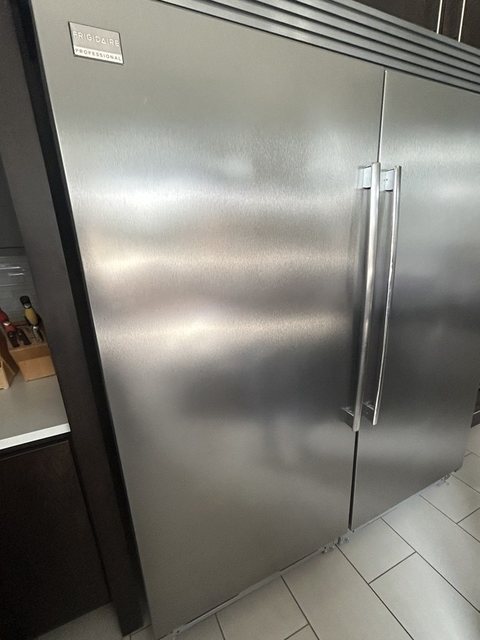
Refrigerators & freezers · Downtown Nampa · home base
Refrigerator repair in Downtown Nampa, a few blocks from the shop
A refrigerator that hums and holds 48°F, a freezer crusted in ice, a garage unit that gave up in the heat: downtown Nampa is where the truck starts.
$99 to diagnose — folded into the repair once you say yesON THE TRUCK First stop of the morning is often hereHOME BASE the truck loads a few blocks over on Davis Ave
The kitchens between the old depot and Lakeview Park were planned around an icebox and a wood stove. A 1925 bungalow on 1st St S or Front St has the refrigerator wedged into an alcove with barely an inch of clearance either side, and a modern French door in that spot runs warm because the condenser cannot breathe. South of downtown, around Holly St and Dewey Ave, the houses near NNU are mostly rentals with a top-freezer that has outlasted several tenants. The 1950s ranches down the 12th Avenue corridor keep a second refrigerator out in a garage nobody ever insulated. Davis Ave is inside all of this, so a downtown call is the shortest drive on the sheet.
In these houses the refrigerator fails from heat it cannot get rid of. A coil packed with dust and cat hair in a tight alcove, a condenser fan that quit, a gasket flattened by forty years of doors slamming: the compressor runs long, the fresh-food side floats up into the forties, and one August afternoon the overload trips for good. The other regular is the defrost fault, where a heater or thermostat opens and the freezer walls itself in with frost while the milk warms. Then there is the tenant who unplugs the unit to move it and plugs it back in with the dial turned to off. We check for that too, at no more than the diagnostic.
Downtown refrigerator symptoms, decoded
Freezer frosting up, fresh-food side warming
The defrost cycle has stopped. Behind the freezer back wall the evaporator has become one solid block of ice, so no air reaches the upper compartment. We meter the defrost heater, the bimetal thermostat and the timer or control, replace the one that has opened, and melt the coil before leaving.
Runs and runs, never cold enough
In an alcove kitchen the condenser is choked or the fan has stopped, and the box cannot dump heat. We pull the unit, clean the coil, put the meter on the fan motor, and test the door gasket. If the compressor is drawing high current on a clean coil, the news is plain and in writing.
Clicking now and then, no cooling
On the side of the compressor, the start relay or the overload has failed, or the compressor itself will not start. We meter the windings and try a known-good relay. A relay is a quick repair from the truck; a compressor on an old top-freezer is usually the end, and we tell you as much.
Puddle on a rental’s kitchen floor
Either the defrost drain is frozen and overflowing into the crisper, or a water line to an ice maker is seeping behind the unit. We thaw and clear the drain, then check the line. The landlord gets a photo of the cause and a figure in writing by text before any part is swapped.
Garage refrigerator in a 1950s ranch quit
In summer a garage unit on the sunny side of a ranch house cooks its coil; in a January inversion the garage sits at 35°F and the freezer thaws because the thermostat never asks for cold. We check which it is and whether the unit is worth another season.
Noise from the back or inside the freezer
A grind from inside is the evaporator fan with ice on the blades or a dry bearing; a rattle from the back is the condenser fan or a loose line touching the cabinet. We find it with the panels off and replace the motor when the bearing has gone.
How a downtown visit goes
Shelf temperature and compressor current read before the technician offers an opinion
Failed part named plainly, one number written down, $99 counted inside it
Truck stock from Davis Ave: relays, defrost heaters, fan motors, gaskets
Anything ordered is fitted on a second visit at the same number
Pull-down proven with a thermometer, floor wiped, warranty on the invoice
Refrigerator repair in Downtown Nampa, how it goes
The unit comes out of its alcove far enough to get a light on the coil, and two thermometers go in, one on each side. The technician listens: compressor, condenser fan, evaporator fan. Off comes the freezer back panel, and the frost pattern across the evaporator says a lot before the meter does. Then amperage at the compressor, resistance on the defrost heater, continuity through the thermostat, voltage at each fan. A sealed-system leak shows as a compressor that runs and draws current with a coil that stays warm, and we call it what it is instead of guessing a board. The cause gets a plain name and one written repair number.
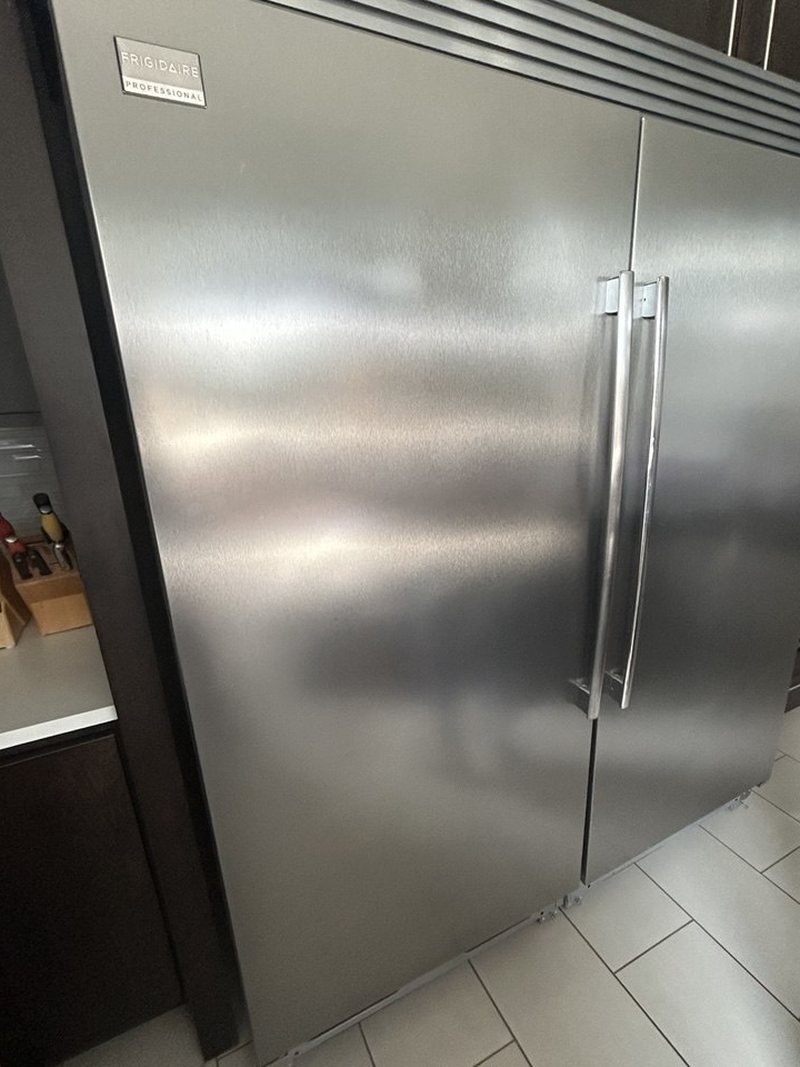
The brands in the downtown grid are Whirlpool, Kenmore, GE, Frigidaire and Amana top-freezers in the rentals, with LG and Samsung French doors where a bungalow got remodeled and the odd KitchenAid in a kitchen someone spent money on. A lot of the calls come from a property manager on the 12th Avenue corridor or a landlord who lives in Kuna: the tenant answers the door, the owner sees a photo and approves by text, and the written warranty rides along with the emailed invoice. Boise commuters on 1st St S get the first stop before 7:30. The pricing is identical for all of them: $99 for the diagnosis, a $99 that sits inside the repair number once you approve it, a number written after the meter and never before.
For a refrigerator in downtown Nampa the diagnostic is $99, and an approved repair number already has that $99 built into it. Decline, and $99 is where it stops. Request service →
Asked in Downtown Nampa
How quickly can a warm refrigerator in downtown Nampa get a visit?
Downtown is the first mile of every route, so a warm refrigerator reported before noon is usually on the sheet for the same day. Calls that come in the afternoon are scheduled into the earliest opening next morning. The dispatcher texts when the technician leaves Davis Ave.
My refrigerator in a small Nampa bungalow kitchen runs constantly. Is that the alcove?
Often. A modern refrigerator needs air across the condenser, and a tight cabinet cut for a 1940s box starves it. We clean the coil and check the fan; if the space is the real problem we show you how much clearance the unit wants rather than replacing parts twice.
Can a tenant near NNU let you in and the landlord pay?
Yes, that is a normal week for us. Put the owner’s phone number in the request. The tenant is there for the visit, the owner sees the failed part in a photo and the figure in a text, and the owner’s email gets the invoice and warranty.
Is a twenty-year-old top-freezer worth repairing?
A relay, a fan motor, a defrost heater or a gasket, yes; those are modest repairs and the old units are simple. A compressor with a dead winding, no. The $99 diagnostic settles which one you have, and the number is on paper before you choose.
What happens to the $99 if I choose not to fix the refrigerator?
It stays the whole bill. You get the failed part named, the reasons in plain words, and a written number you can hold onto for a week if you want to think. Approve, and that number already carries the $99 rather than adding it.
Refrigerators and freezers in Downtown Nampa: get a window.
The phone is quicker; the form lands on the same desk. Both get you a text with a window, and until a technician has had a meter on the machine the only figure anyone quotes is $99.
Window texted to you; the technician will call if you would rather talk
$99 buys the meter reading and the diagnosis — no money before that
The repair as one written figure, $99 folded in
Warranty term printed on the invoice
How a visit runs
Four steps, and no step five on the invoice
1
Window
Ring the shop or fill in the form; dispatch answers with a window, and a text follows as the truck pulls off Davis Ave — first stops go to the Boise commuters, Saturday mornings to everyone else.
2
Meter
Measurements come before opinions: amps at the compressor, degrees on the shelf, ohms across the element. The failed part gets its everyday name from the technician, who then writes the repair as a single figure, $99 folded in.
3
Part
The shelves on the truck hold what this valley wears out — inlet valves, defrost heaters, heating elements, igniters, drain pumps, rollers. When something must be ordered, the return trip happens on our calendar and the figure you approved stands.
4
Proof
The machine runs a whole cycle while you watch, panels and floor go back the way they were, and the invoice that reaches your email carries the warranty term.
Refrigerators and freezers in Downtown Nampa — one written number, fixed once.
$99 puts a meter on the machine. The repair goes on the ticket as one figure with that $99 inside it, the part is usually riding in the truck, and the invoice states the warranty term. Parma pays what Davis Ave pays.