Dishwashers · retrofitted into old kitchens · Downtown Nampa
Dishwasher repair in Downtown Nampa for kitchens that never had one
Gray water in the sump after every wash, a chalk film on the glasses, a control panel that went dark: dishwasher repair in downtown Nampa checks your water as carefully as the machine.
$99 to diagnose — folded into the repair once you say yesON THE TRUCK Unsoftened water named, not blamed on the machineHOME BASE the truck loads a few blocks over on Davis Ave
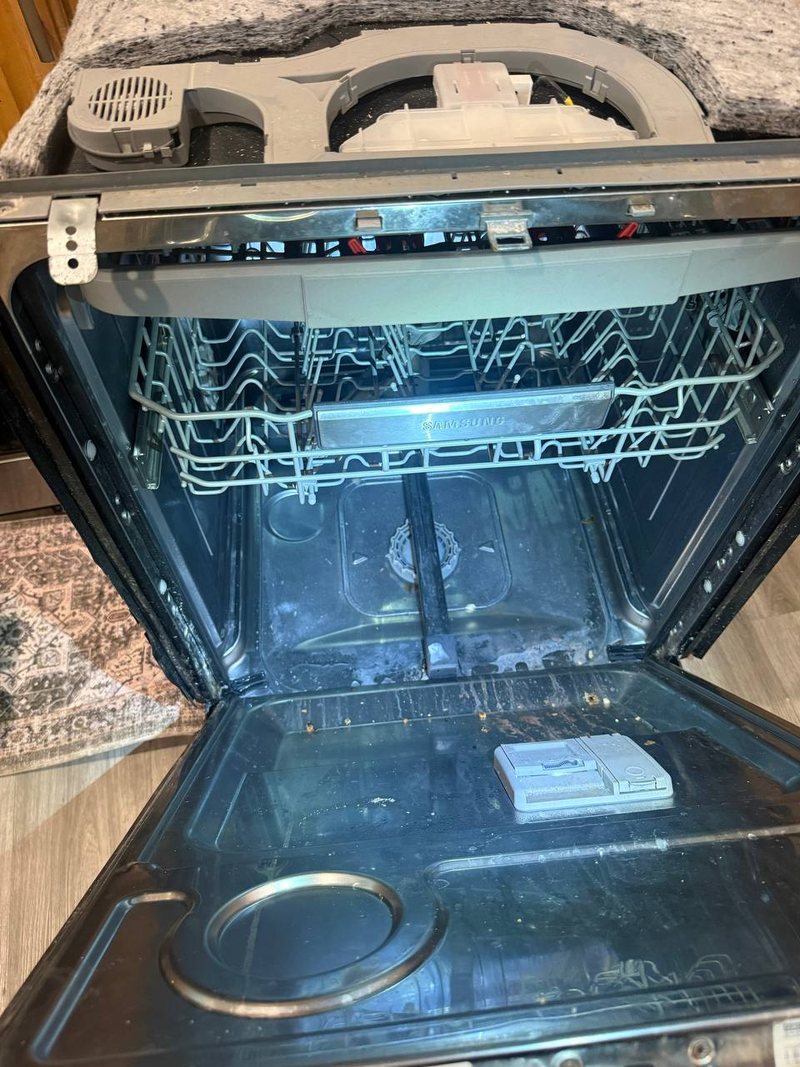
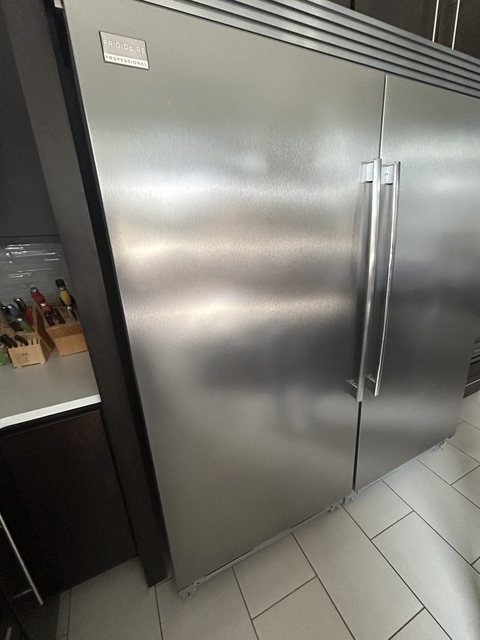
Most dishwashers in the historic district were cut into a kitchen that was finished before dishwashers existed. A 1930s house near Lloyd Square has one wedged under a counter an inch too low, draining into a disposal added in 1985, on a supply line that runs across the crawlspace. The NNU rentals on Dewey Ave and Holly St have a builder-grade Frigidaire that a landlord put in to rent the place faster. The 1950s ranches south of the depot are the easy ones, with a standard opening and a proper air gap. Almost none of these houses has a softener, so the water is hard straight from the city wells. The shop on Davis Ave is inside the same grid.
Unsoftened water is the story. The heating element grows a crust of scale until it cannot raise the water to temperature, the cycle runs long and ends with a heat fault. The inlet valve narrows and the tub fills short. Every glass in the cupboard wears a haze the tenant blames on the machine. Then the retrofits fail in their own ways: under a low counter the drain hose gets looped the wrong way and siphons back, the sump holds water because a handyman never punched the disposal knockout, a door that will not latch because the cabinet has settled over ninety years. A typical scene: a Bosch in a remodeled bungalow, three inches of water, a glass chip in the impeller.
What the dishwasher symptom points at
Standing water after the wash ends
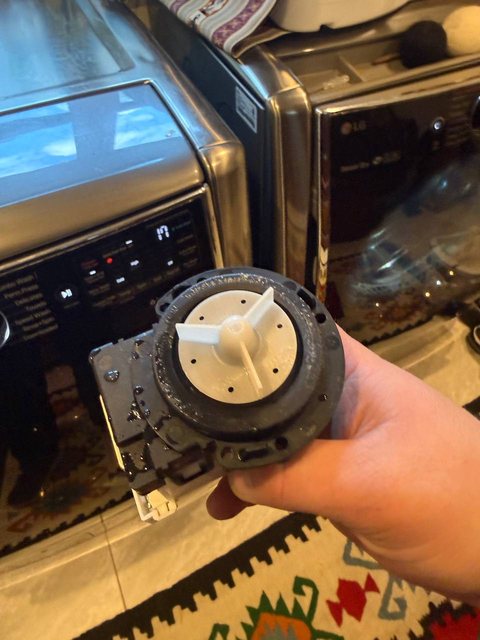
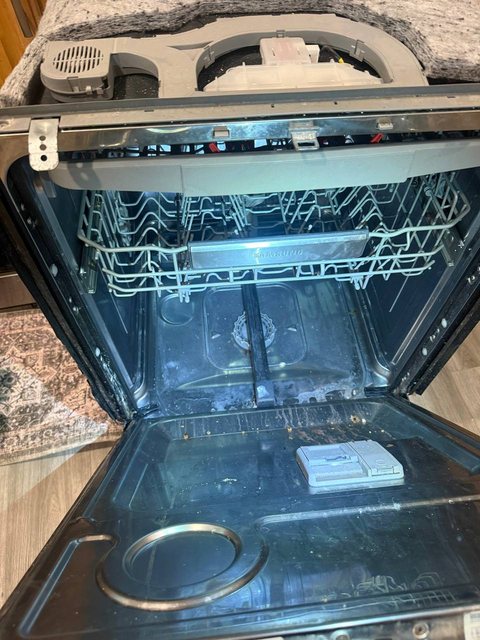
Usually a glass chip wedged in the pump impeller, a check valve that has stuck, a kinked drain hose where the counter is low, or that disposal knockout nobody removed. The sump comes open, the pump gets cleared and metered, and the hose is traced to the drain. If the pump motor is dead, the truck carries the replacement.
Chalky glasses and a haze on the tub walls
Hard downtown water with no softener, plus a rinse aid dispenser that ran dry or quit dispensing. We test the dispenser and check the water. If the machine is doing its job the visit ends there at $99 with plain advice, because a new part will not soften the city supply.
Cycle runs for hours or stops with a heat error
The element is scaled or open, or the thermistor has drifted. We meter the element cold, run a cycle and read the water temperature as it climbs, and replace the element that cannot get there. On this water a new element will scale too, and we say how to slow it down.
Dishes come out dirty, arms barely turn
A filter packed with food, spray arm holes plugged with scale, a short fill from a narrowed valve, or a tired circulation pump. We check the fill against the mark, watch the arms with the door switch bypassed, and clean or replace what is holding the pressure down.
Panel dark, no start, or the door will not latch
In a settled old cabinet the latch may no longer meet the strike, and the machine will not start. Otherwise it is the door switch, the control board or the junction box under the unit. We check the latch alignment and supply voltage before anyone says the word board.
Leak at the door or water under the toe kick
The door gasket has gone flat, a spray arm is hitting the seal, a hose clamp has loosened, or the pump housing has cracked. Rather than guess from the puddle, the technician pulls the toe kick, lays a light on the floor, runs a cycle and traces the drip back to where it starts.
The dishwasher procedure
Hardness strip on the water and a look for a softener before the machine is judged
Element, valve, pump and thermistor metered, one number written with $99 inside
Pumps, valves and elements for Bosch, Whirlpool, Frigidaire and GE on the truck
Ordered part fitted on a return trip at the same written number
Full cycle proven, latch and toe kick back in place, warranty on the invoice
Dishwasher repair in Downtown Nampa, what we do at the machine
The technician begins under the sink: supply valve, drain routing, disposal knockout, air gap if there is one. Then under the machine for voltage at the junction box and any sign of a leak. A cycle runs with the door switch bypassed so the fill, the spray pressure and the temperature climb can be watched instead of imagined. Element, valve solenoids, pump winding and thermistor each get metered as the cycle points to them. A hardness strip goes in the water because in this part of Nampa that is half the diagnosis. The bad part gets a plain-English name; the fix gets a single figure on paper.
The downtown machines are Frigidaire, Whirlpool and GE in the rentals, Bosch and KitchenAid in the bungalows that were remodeled with care, and Kenmore in the ranches that have not been touched since the 1990s. A property manager on the 12th Avenue corridor can look at a photo, text back a yes, and find the invoice and its warranty line in their email while the tenant is still at the door. Owners who commute to Boise get the early window. If the machine turns out to be fine and the water is the problem, you hear that and pay the $99 alone. Otherwise the meter comes first, the written figure second, and a yes means that total already has your $99 in it.
Dishwasher repair in downtown Nampa: $99 to diagnose, one figure on paper, and a yes folds the $99 into that figure. Request service →
Asked in Downtown Nampa
Why does every glass in my downtown Nampa kitchen come out white?
The city water is hard and the house has no softener, so mineral dries on the glass. A working rinse aid dispenser helps; a softener fixes it. We check the dispenser so the machine is not blamed for the water, and tell you which it is.
Will repairing a dishwasher in a 1930s Nampa kitchen mean taking the cabinet apart?
Rarely. The kick plate comes off, the machine slides forward a few inches on its leveling legs, and the pump, valve, element and board are reachable. A unit that was screwed in under a counter that is too low gets freed with care and put back the same way.
Does a Nampa rental dishwasher need the landlord present?
No. Whoever lives there opens the door; the owner sees a photo and the figure by text and answers yes or no from wherever they are. Invoice and warranty follow to the owner’s email. Include the owner’s number, plus any gate code or dog, in the request.
Should I run the hot tap before starting the dishwasher?
Yes, especially in an old house where the water heater is a long pipe run away. Starting with hot water at the inlet spares the element and shortens the cycle. When a cycle stalls on heat even after that, it is time for a meter on the element and the thermistor.
What is the charge if the dishwasher in the historic district is not worth fixing?
$99, and nothing else. What failed, and why, is written down for you in plain words. Say yes instead and that same $99 is absorbed into the repair figure, not stacked on top of it, and the invoice carries the warranty.
The phone is quicker; the form lands on the same desk. Both get you a text with a window, and until a technician has had a meter on the machine the only figure anyone quotes is $99.
Window texted to you; the technician will call if you would rather talk
$99 buys the meter reading and the diagnosis — no money before that
The repair as one written figure, $99 folded in
Warranty term printed on the invoice
How a visit runs
Four steps, and no step five on the invoice
1
Window
Ring the shop or fill in the form; dispatch answers with a window, and a text follows as the truck pulls off Davis Ave — first stops go to the Boise commuters, Saturday mornings to everyone else.
2
Meter
Measurements come before opinions: amps at the compressor, degrees on the shelf, ohms across the element. The failed part gets its everyday name from the technician, who then writes the repair as a single figure, $99 folded in.
3
Part
The shelves on the truck hold what this valley wears out — inlet valves, defrost heaters, heating elements, igniters, drain pumps, rollers. When something must be ordered, the return trip happens on our calendar and the figure you approved stands.
4
Proof
The machine runs a whole cycle while you watch, panels and floor go back the way they were, and the invoice that reaches your email carries the warranty term.
Dishwashers in Downtown Nampa — one written number, fixed once.
$99 puts a meter on the machine. The repair goes on the ticket as one figure with that $99 inside it, the part is usually riding in the truck, and the invoice states the warranty term. Parma pays what Davis Ave pays.