Washers · basements, back porches, closets · Downtown Nampa
Washer repair in Downtown Nampa for the drum that quit
A washer full of gray water in a Front St basement, a spin cycle that shakes the back porch, a lid that locks and quits: washer repair in downtown Nampa starts with the meter on pump and motor, then one number in writing.
$99 to diagnose — folded into the repair once you say yesON THE TRUCK Basement and porch laundries, no problemHOME BASE the truck loads a few blocks over on Davis Ave
Washers in the historic district and the NNU blocks
Washers · Downtown Nampa
Downtown Nampa keeps its washers in odd places. In the Craftsman houses off 1st St S and around Lloyd Square the laundry is down a steep basement stair beside a floor drain, or on an enclosed back porch that freezes in January. The NNU rentals along Holly St and Dewey Ave run a hard-used top-loader in a closet someone framed in during the 1970s. The 1950s ranches south of the depot have a proper laundry room, and the remodeled bungalows near Lakeview Park have a front-load pair on pedestals. All of it is within a short walk of the shop on Davis Ave, and it is usually the first or second stop of the day.
Old plumbing shapes the failures. A galvanized standpipe that has narrowed over sixty years backs up on drain, and the washer times out or floods the basement floor; the pump is fine, the drain is not, and we tell you the difference. City water with no softener behind it scales up the inlet screens, and the machine fills at a crawl until it throws a fill error. Rentals bring rental problems: a lid switch broken by a slam, a coin in the pump, a belt stretched by years of overloaded blankets. One scene we see every month is a porch top-loader that will agitate but not spin. That is a lid switch, a belt or a coupler, and all three are on the truck.
What a downtown washer symptom usually means
Agitates but will not spin
On the top-loaders that fill the NNU rentals this is the lid switch or lid lock, a worn belt, or the plastic coupler between motor and transmission that shears when the tub is overloaded. We meter the switch, look at the belt and the coupler, and replace the one that failed.
Quits with water still in the tub
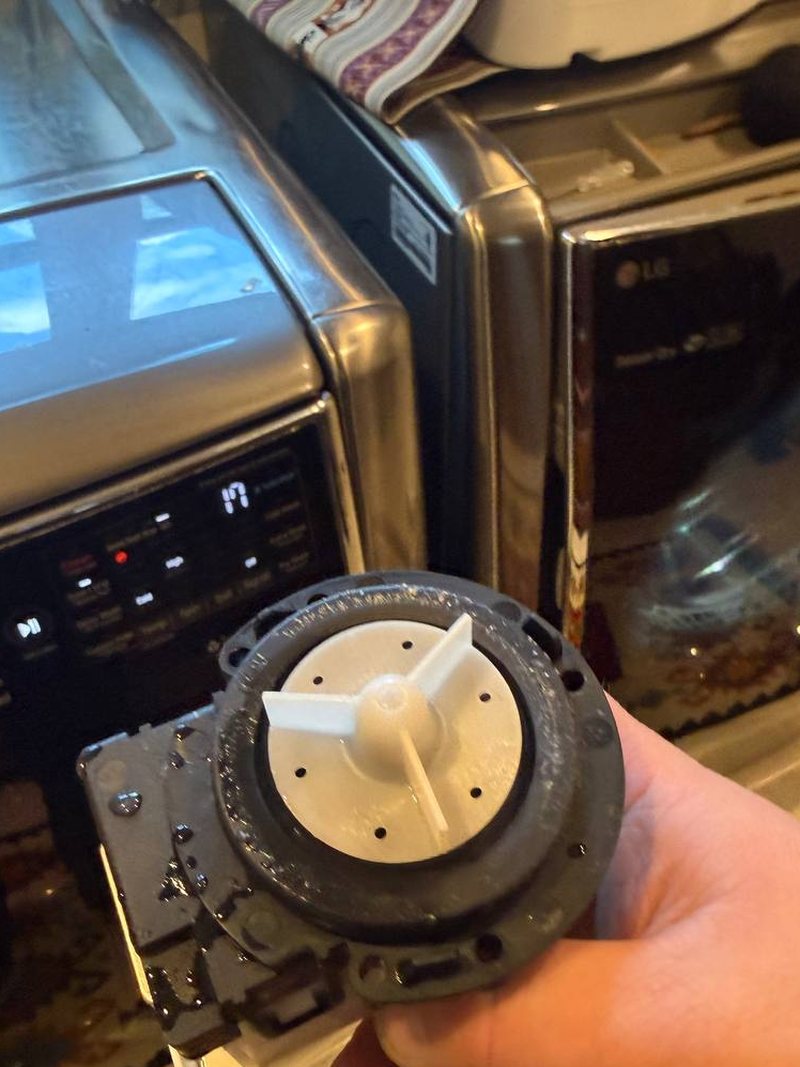
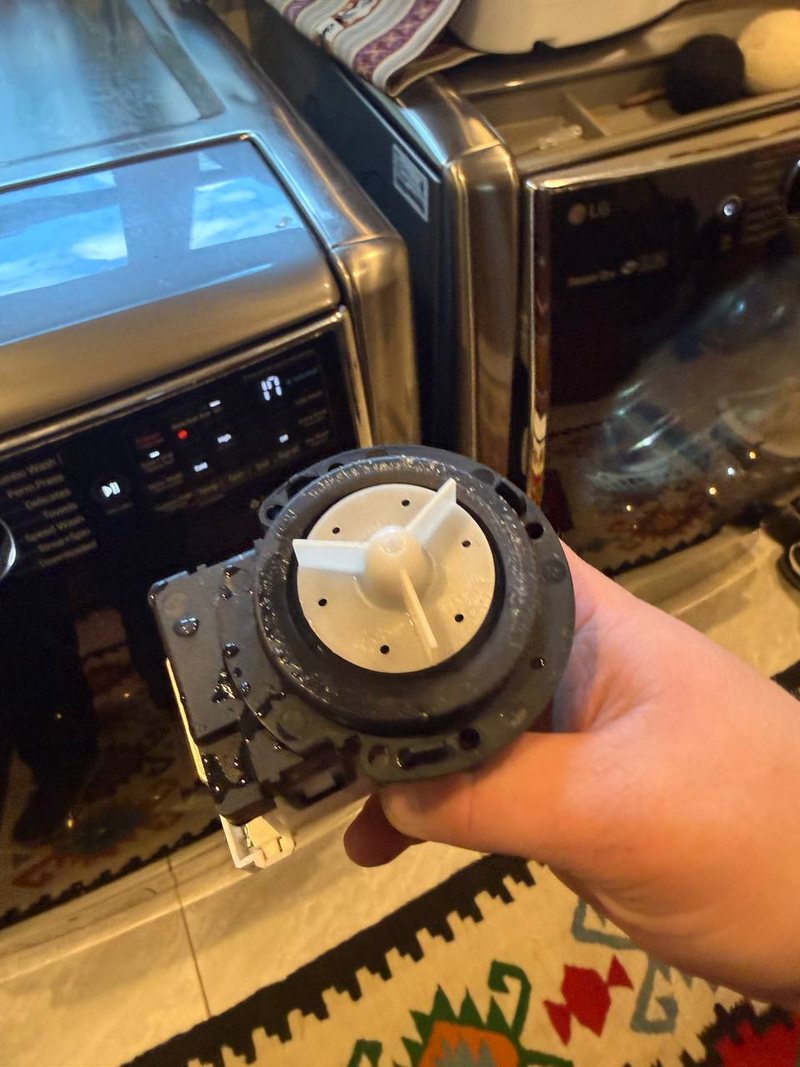
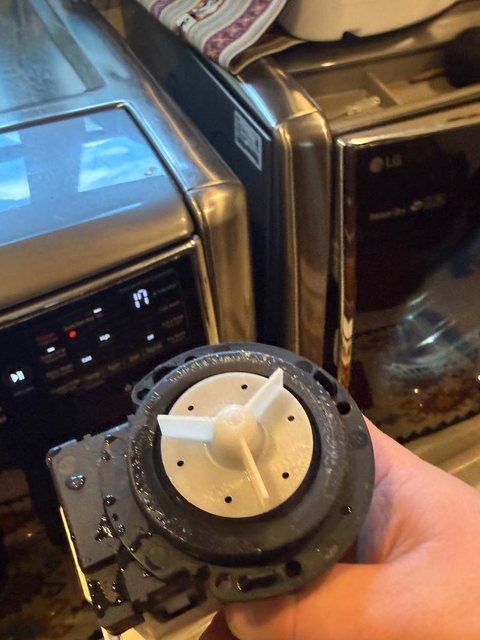
Either the pump is jammed or the house drain is refusing the water. We clear the pump of coins, hair ties and socks, meter the motor, then pump into a bucket to prove the pump works before the standpipe takes the blame. If the house drain is the trouble, you hear that plainly.
Shakes the porch or walks across the basement
Soft suspension rods under a top-load tub, spent shocks under a front-load drum, or a floor that was never level to begin with. We check the suspension, level the machine, and turn the drum for bearing noise. A bad bearing on a front-loader gets a written number, not a shrug.
Fills slowly or sits waiting on the fill
Scale in the inlet screens from unsoftened downtown water, or a weak solenoid in the valve. We clean the screens, meter both solenoids, and replace the valve if it passes a trickle. Low pressure in an old house line is a separate finding and we say which it is.
Leaks onto the floor during the cycle
The drain hose has hopped out of the standpipe, a fill hose has aged out, the front-load door boot has torn, or a pump seal has gone. A full cycle runs with a light set on the floor, and we find where the water actually starts, which is often not where the puddle ends up.
Dead, no lights, or the lid lock blinks
A door or lid lock that will not latch stops the whole machine. Otherwise it is the control board, an old top-loader’s timer, or on some models a thermal fuse. We meter the lock and the supply before the board is named, because boards are the last resort, not the first.
The washer procedure
Pump, motor and lid lock metered first, opinions second
A single repair figure in writing, and the $99 diagnosis sits inside it
Pumps, lid switches, belts, couplers and valves stocked for the top-loaders here
A part that has to come in means a second trip, same number
Wash, drain and spin all proven, basement floor left dry, the warranty written onto the invoice
Washer repair in Downtown Nampa, from the meter to the cycle
A downtown washer visit starts with the water path, because the plumbing is as old as the house. The technician runs a short fill and drain and watches the standpipe. Then the machine comes apart as far as it needs to: lid switch metered, belt and coupler inspected, pump motor checked for continuity, drum rotated by hand to listen for the bearing. Front-loaders in the remodeled houses give up a stored error code, and we read it and then reproduce the fault rather than trusting the code alone. By the end of that you know the failed part by name and the repair by a single figure in writing, and that figure already carries the $99.
The machines in this quarter are mostly Whirlpool, Kenmore, Maytag and Amana top-loaders, twenty years old in the rentals, and front-loaders from Electrolux, GE, LG and Samsung in the houses that have been redone. Many belong to a landlord who is not on site. The technician is let in by the tenant, the owner sees a photo of what failed and answers by text, and by evening the owner’s inbox has the invoice and the written warranty. Basement machines that need to come out for a bearing job get scheduled with two people. A downtown Nampa washer repair is never priced ahead of the diagnosis; the figure is written, and the $99 sits inside it rather than on top when you approve.
Downtown Nampa washer repair: meter first, then a figure in writing. Say yes and the $99 diagnosis sits inside that figure; say no and the entire charge is $99. Request service →
Asked in Downtown Nampa
Does a washer in a downtown Nampa basement have to come out to be repaired?
Most repairs happen in place: pump, belt, lid switch, coupler, valve, boot. The one job that may mean moving the machine to the floor drain or the garage is a front-load tub bearing, and you hear that up front, with the figure in writing.
My rental near NNU has a washer that floods the floor on drain. Is the machine bad?
Half the time it is the house drain. An old standpipe or a floor drain full of lint cannot take the pump’s flow, and the water comes back up. We prove the pump into a bucket first; if the washer turns out fine, that is what you are told and the $99 is where it ends.
Does hard downtown Nampa water hurt a washer?
It scales the inlet valve screens and leaves the whites gray, and that is about the extent of it. Cleaning the screens and replacing a scaled valve fixes the slow fill; a softener is the only thing that keeps it from returning, and most of these old houses never had one.
How does approval work when the landlord lives out of town?
Put the owner’s number in the request. After the diagnosis the technician texts the owner a photo and the written repair number, waits for the yes, and does the repair while the tenant is still home. Invoice and warranty follow to the owner’s inbox.
What does the $99 buy on a washer call in the historic district?
The trip, the meter on the pump and motor, a run through a test cycle and an answer in plain words. Give the go-ahead and the figure on paper has that $99 sitting inside it. Turn it down and you owe $99, nothing beyond it, with the machine put back the way it was.
The phone is quicker; the form lands on the same desk. Both get you a text with a window, and until a technician has had a meter on the machine the only figure anyone quotes is $99.
Window texted to you; the technician will call if you would rather talk
$99 buys the meter reading and the diagnosis — no money before that
The repair as one written figure, $99 folded in
Warranty term printed on the invoice
How a visit runs
Four steps, and no step five on the invoice
1
Window
Ring the shop or fill in the form; dispatch answers with a window, and a text follows as the truck pulls off Davis Ave — first stops go to the Boise commuters, Saturday mornings to everyone else.
2
Meter
Measurements come before opinions: amps at the compressor, degrees on the shelf, ohms across the element. The failed part gets its everyday name from the technician, who then writes the repair as a single figure, $99 folded in.
3
Part
The shelves on the truck hold what this valley wears out — inlet valves, defrost heaters, heating elements, igniters, drain pumps, rollers. When something must be ordered, the return trip happens on our calendar and the figure you approved stands.
4
Proof
The machine runs a whole cycle while you watch, panels and floor go back the way they were, and the invoice that reaches your email carries the warranty term.
Washers in Downtown Nampa — one written number, fixed once.
$99 puts a meter on the machine. The repair goes on the ticket as one figure with that $99 inside it, the part is usually riding in the truck, and the invoice states the warranty term. Parma pays what Davis Ave pays.