Washers · stacked pairs, front-load and top-load · North Nampa
Washer repair in North Nampa when the drum stops turning
Standing water in the tub, a lid that locks and does nothing, a front-loader walking across the laundry closet on spin.
$99 to diagnose — folded into the repair once you say yesON THE TRUCK Stacked pairs pulled and reset7 MIN from Davis Ave · the drive never shows on the invoice
Laundry in North Nampa lives in a closet. The two-story houses built off Cherry Ln, Ustick Rd and Can-Ada Rd since the late 1990s put the washer and dryer upstairs in a hall closet or in a narrow room off the garage, and a good share of them are stacked pairs from the builder’s Whirlpool or GE package. Getting the washer out to work on it is half the job, and the truck carries the straps and dollies for it. From the shop the route is up 11th Ave N or 16th Ave N and over the freeway, past the Idaho Center and the two hospitals, into streets where every fourth house has the same machine.
Two things drive the calls. Nampa city water is hard, and although most of these houses have a softener, the inlet valve screens still fill with scale and the valve starts sticking open or refusing to open. The other is the front-loader itself: a boot cracks where it folds, a hair tie or a sock ends up in the pump, and by year ten the bearing has started growling on spin. A stacked unit in a closet off Garrity Blvd that suddenly leaks from the front is nearly always the boot, and a top-loader that fills, hums and never agitates most often needs a lid lock or a drive coupler, and both ride on the truck.
What the washer is telling you
Cycle quit with the tub still full
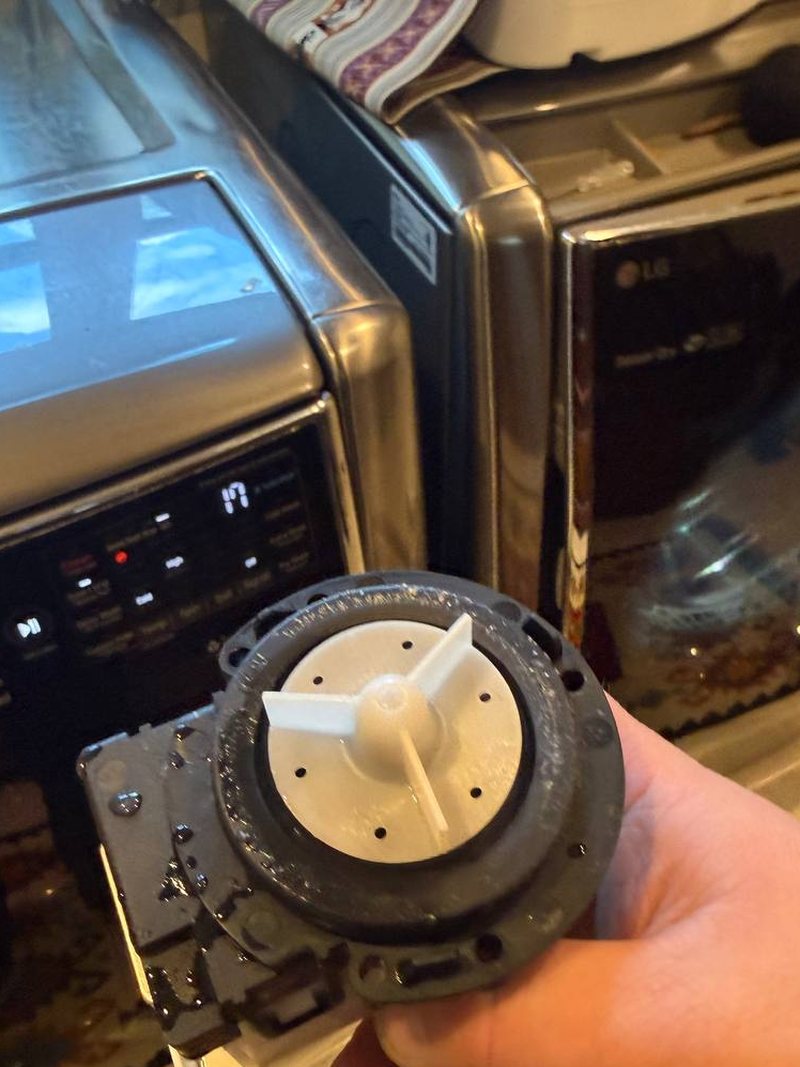
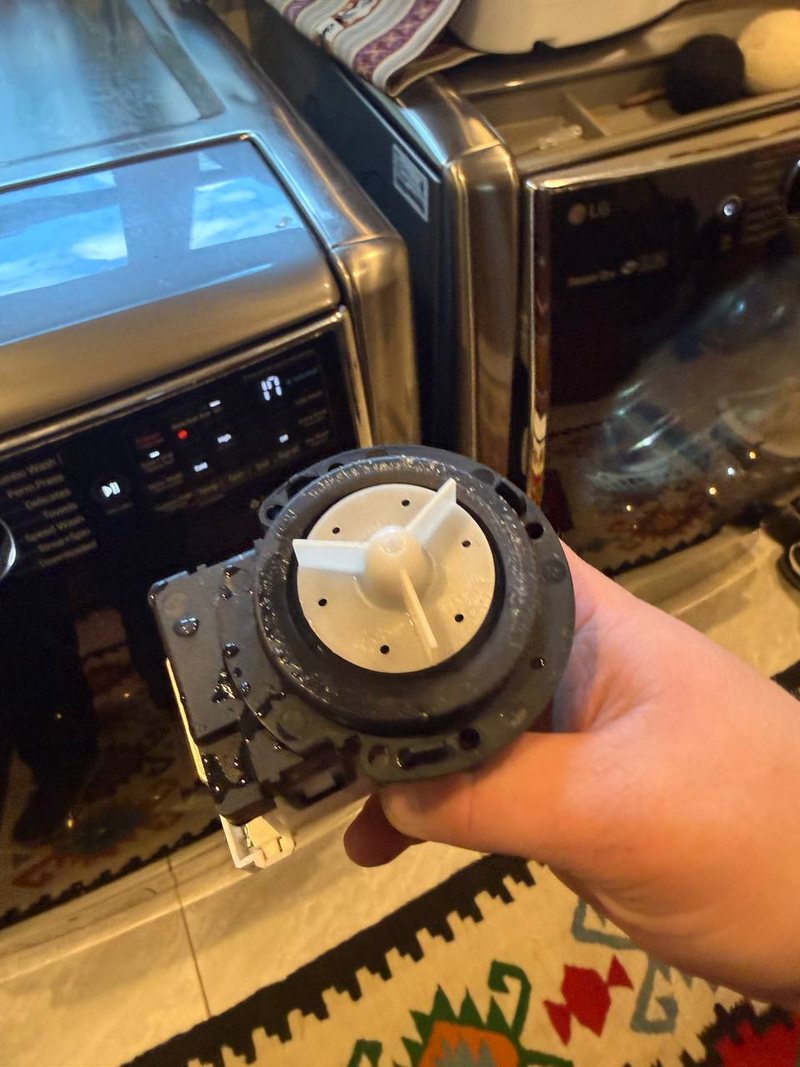
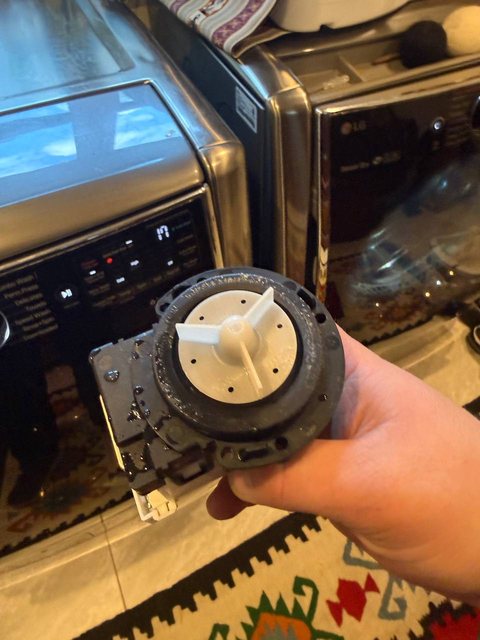
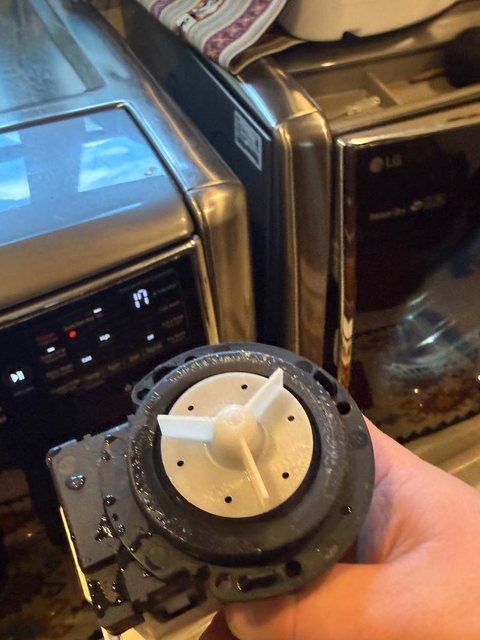
Something has jammed the drain pump or its motor has quit. The housing comes open, whatever rode in with the load comes out, and the motor gets a reading. A pump that is clear and reads open gets replaced on the spot; the drain hose and the standpipe get a look so the same call does not repeat next month.
Fills, hums, will not agitate or spin
On a top-loader the lid lock, drive coupler or shift actuator is the usual suspect. A front-loader points instead at the drive belt or the motor control board. Each of those is a resistance check on the meter, not a guess, and most are same-visit repairs from stock on the truck.
Leak from the front on spin
A front-loader’s boot has split, or a coin is trapped in its fold. We pull the boot, find the damage, and replace it. If the leak is from the back, the inlet hoses and the valve body get checked before anything is ordered.
Lid locked, lights blinking, nothing happens
The lid lock switch has failed or the control has stored a fault code from an unbalanced load. We read the code, clear it, and meter the lock. Sometimes the lock is fine and a broken lid strike is the whole story, which is a much smaller repair.
Thumps and creeps on spin
Worn rods under a top-load tub, or tired shocks and a spider arm under a front-load drum. Upstairs in a Cherry Ln hall closet every wall picks it up. Rods, shocks, leveling feet and the drum bearing all get a look, and we tell you if the bearing is far enough gone to change the math.
Takes forever to fill, or does not fill
Hard city water has scaled over the inlet screens, or one of the valve solenoids has died. Off come the hoses; the screens are scrubbed or swapped and each solenoid gets a reading. A softener that ran dry gets mentioned too, since otherwise the replacement valve will scale up just as fast.
The procedure in the laundry closet
Stacked pair unstrapped and pulled, floor protected, before anything is opened.
Pump, valve, lock and motor metered; stored fault codes read and written down.
One figure on paper; your $99 is inside it, not on top.
Pumps, valves, boots, lid locks and couplers for the builder brands on the truck.
Drain and spin proven on a test cycle, pair restacked and leveled, warranty term on the invoice.
How the diagnosis runs on a North Nampa washer
First question from the technician: what did the machine do last. Then it runs. If it fills and then refuses to spin, the technician watches the cycle to the failure point rather than working from a description. Stored fault codes on the control are read before they are cleared. Resistance readings go on the valve coils, the pump motor, the lock and the drive motor, each compared with what a good part shows, and the drain path gets checked from pump to standpipe. On a front-loader the boot is folded back and the drum is rocked by hand for bearing play. That ends with the technician naming the part in plain words and writing one figure, $99 included.
Whirlpool, Maytag, GE, Samsung and LG are daily work, and so are Frigidaire, Electrolux, Kenmore, Amana and Speed Queen, along with the stacked and laundry-center units that fill the North Nampa closets. A landlord with a house near the Idaho Center never has to meet the truck: the yes arrives by text, and email brings the invoice, warranty wording included. Hospital staff on odd shifts and Boise commuters get the first stop of the day or a Saturday morning. Because most washer parts are stock, the fix usually happens while the truck is there; when ordering is unavoidable, the second trip happens at the figure you already approved, with nothing added for it. The figure is written down after the meter work, never before. Approve, and the $99 is sitting in that total already; refuse, and the $99 closes the visit.
A North Nampa washer visit starts at $99 for the diagnosis; approve the written figure and that $99 is already folded into it. Pass on the repair and the bill reads $99, full stop. Request service →
Asked in North Nampa
Will you take on a stacked washer in a North Nampa closet?
Stacked pairs are most of the washer work north of the freeway. The technician unstraps and pulls the unit, protects the floor, does the repair, and restacks and levels it before leaving. Tell dispatch it is stacked and whether the closet is upstairs so the right dolly is on the truck.
Is a front-loader that smells worth repairing?
Smell is usually not a repair, it is a boot that needs cleaning and a door left ajar after each load. Once the boot has split or turned black under the fold it becomes a repair, and it is a common one on the builder-package front-loaders in the Cherry Ln subdivisions. We replace the boot and show you what to wipe.
My washer stops mid-cycle and the lights blink. Is that the board?
Sometimes, but less often than people expect. Blinking lights usually mean a stored fault: a lid lock, a drain that took too long, an unbalanced load. We read the code and meter the part it points to before anyone buys a board. A board is quoted only when the meter says the board.
Do you fix washers in North Nampa rentals when I am not there?
The door is opened by the tenant; the figure reaches the owner by text and comes back as a yes or a no, and afterward the owner gets an email with photo, invoice and the written warranty. The tenant never sees a price and never has to decide anything. Put the tenant’s phone number in the request and we coordinate the window with them.
Why does hard water matter for a washer?
Scale from Nampa city water builds on the inlet screens and coats the valve internals, so the fill slows to a trickle or the valve hangs open and the tub overfills. It also builds up on the pressure switch hose. Keeping the softener in salt and cleaning the screens once a year gets years out of a valve.
The phone is quicker; the form lands on the same desk. Both get you a text with a window, and until a technician has had a meter on the machine the only figure anyone quotes is $99.
Window texted to you; the technician will call if you would rather talk
$99 buys the meter reading and the diagnosis — no money before that
The repair as one written figure, $99 folded in
Warranty term printed on the invoice
How a visit runs
Four steps, and no step five on the invoice
1
Window
Ring the shop or fill in the form; dispatch answers with a window, and a text follows as the truck pulls off Davis Ave — first stops go to the Boise commuters, Saturday mornings to everyone else.
2
Meter
Measurements come before opinions: amps at the compressor, degrees on the shelf, ohms across the element. The failed part gets its everyday name from the technician, who then writes the repair as a single figure, $99 folded in.
3
Part
The shelves on the truck hold what this valley wears out — inlet valves, defrost heaters, heating elements, igniters, drain pumps, rollers. When something must be ordered, the return trip happens on our calendar and the figure you approved stands.
4
Proof
The machine runs a whole cycle while you watch, panels and floor go back the way they were, and the invoice that reaches your email carries the warranty term.
Washers in North Nampa — one written number, fixed once.
$99 puts a meter on the machine. The repair goes on the ticket as one figure with that $99 inside it, the part is usually riding in the truck, and the invoice states the warranty term. Parma pays what Davis Ave pays.