Ranges, cooktops and ovens · induction, electric and gas · North Nampa
Oven and range repair in North Nampa when the burner only clicks
A burner that clicks without lighting, an oven that stalls a hundred degrees short, an F-code on the display before dinner.
$99 to diagnose — folded into the repair once you say yesON THE TRUCK Gas, electric and induction7 MIN from Davis Ave · the drive never shows on the invoice
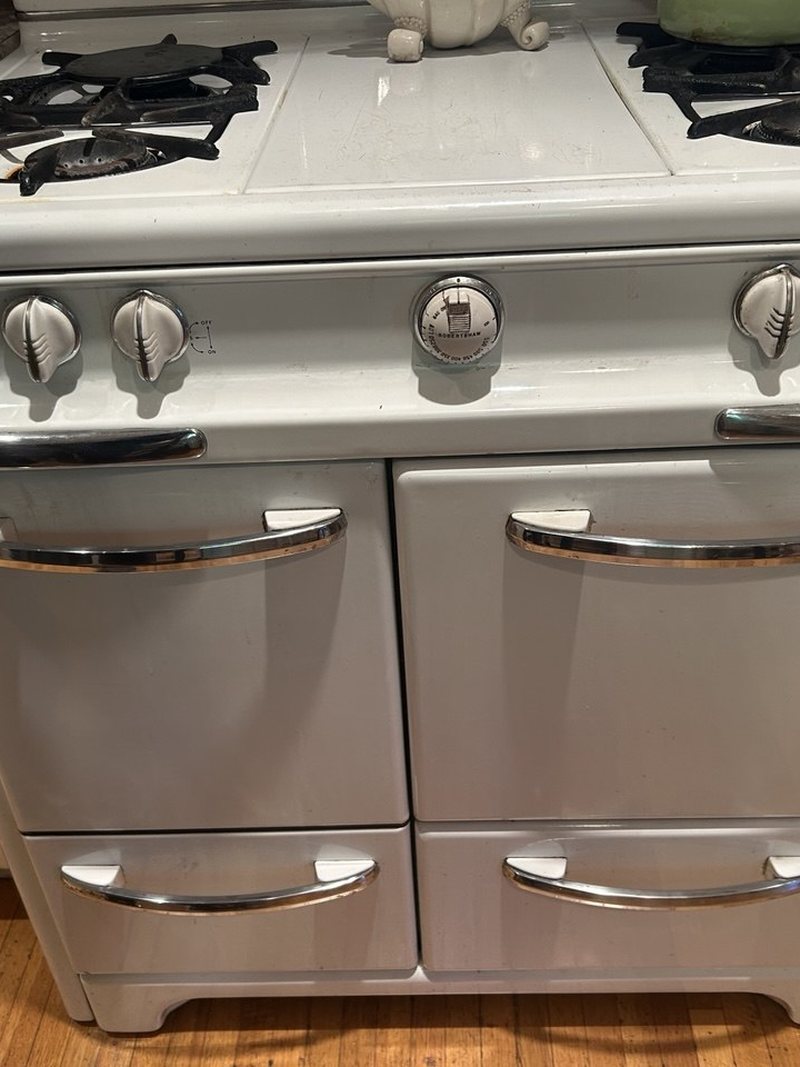
The kitchens in the subdivisions off Cherry Ln, Ustick Rd and Can-Ada Rd came with a freestanding range from the builder’s package, most often a Whirlpool or Frigidaire electric with a glass top, with gas where Intermountain Gas was run to the house. The newer phases near Can-Ada Rd are seeing slide-ins and induction tops, and the bigger houses have a GE or KitchenAid oven set into the wall with the cooktop on its own circuit. The truck comes up from Davis Ave through the Franklin or Garrity exit, and the stops run from the streets behind the Ford Idaho Center to the houses around the hospitals where somebody is cooking at odd hours.
What breaks is fairly predictable. After a decade of Sunday roasts an electric oven’s bake element opens and only the broiler still heats. The oven igniter on a gas range weakens until the valve never opens, and you smell gas for a second before it gives up. A drifting sensor leaves the oven baking cold, or the display throws an F-code. Dust from the fields and from the next phase of construction packs the burner ports on a gas cooktop until the flame is uneven. A summer brownout leaves a control board that beeps and does nothing. Each of those is a resistance reading, and the truck carries the usual parts for it.
Symptoms we hear from North Nampa kitchens
Gas burner clicks, no flame
Sparks are arriving at the burner but nothing catches: ports plugged with dust or boil-over, a wet igniter, or a cracked spark electrode. We clean the ports, dry and inspect the electrode, and put the module on the meter. If the burner lights but burns yellow, the air shutter and orifice get checked next.
Oven will not heat, or takes forever
Electric: the bake element, or its relay on the control board, has opened. Gas: the oven igniter is too weak to draw what the safety valve needs before it will open. Both show on the meter within a minute. We fit the new element or igniter and stay while the oven climbs to temperature.
Oven runs cold or uneven
Either the sensor has wandered off its curve, heat is escaping past a leaking door gasket, or a sagging bake element is heating one side. We compare the sensor to a known temperature, inspect the gasket, and adjust the control’s offset if the parts test fine. A wall oven on Ustick Rd with a torn gasket bakes cold every time.
An F-code on the display
The F1 and F2 family and their cousins point at a sensor, a keypad or the control. A code is a symptom; we note it, clear it, make it come back, and meter whatever it points to. When a sensor code shows up with a good sensor, the wire harness at the back of the oven is often the real fault, not a board.
Glass-top zone cold, or will not shut off
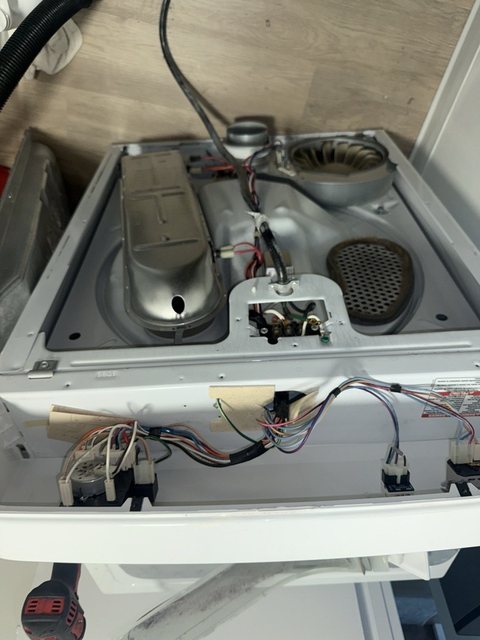
One radiant element reading open, a welded infinite switch, or the limiter under the glass. A zone that will not shut off is the switch; kill the breaker and leave it off until the truck arrives. From the back, both the element and the switch get metered, and the failed one gets swapped.
Beeps, display blank, nothing works
First the supply at the receptacle or the junction box, then the control board and its transformer. July and August thunderstorm brownouts take out boards in the builder ranges. We confirm voltage and meter the board before writing a number for it. Sometimes it is nothing more than the keypad ribbon.
The procedure at the range
Current draw at the igniter, element resistance and the sensor reading, before any part is named.
Stored F-codes read and written down, then cleared and reproduced.
Gas burners checked for flame color and port blockage on every visit.
A single figure on paper for the repair, $99 diagnostic included in it.
Oven run to temperature and verified, panels back, warranty written on the invoice.
Oven and range repair in North Nampa, how it runs
The technician turns the oven on and watches what it does before opening anything. A clamp meter goes around the gas oven igniter’s circuit for current draw, because one that glows and still pulls too little will never open the valve and looks perfectly healthy to the eye. The resistance of an electric bake element is read, and the element itself is inspected for a bulge or a break. The temperature sensor is read at room temperature and again as the oven warms. Surface burners are lit one at a time, and on a gas top the flame color says whether the air shutter or the orifice is wrong. Any F-code on the display is read, cleared and reproduced. Then the bad part is named in plain language and the repair goes on paper as one figure, a figure that already has the $99 in it.
We repair gas, propane, electric and induction ranges, wall ovens and cooktops: the Whirlpool and Maytag pair, GE and Hotpoint, Samsung and LG, Frigidaire, KitchenAid and Bosch, Electrolux, Kenmore and Amana. Rental owners in North Nampa say yes to the number by text; the invoice, warranty printed on it, lands in their email. The first window of the morning is held for people leaving for Boise, and Saturday mornings are open for everyone. Igniters, bake elements, sensors, spark modules and radiant elements for the builder brands are carried on the truck, which is why most oven repairs finish the same visit. A repair is priced once the diagnostic is finished and not before, in writing: agree to it and the $99 is buried in that total; pass on it and the bill never grows past $99.
In North Nampa an oven or range diagnostic is $99, and the repair figure you approve has that $99 built in from the start. The figure is written after the readings are taken, never ahead of them. Request service →
Asked in North Nampa
My North Nampa oven heats on broil but not bake. What is that?
Almost always an open bake element in an electric oven. It fails at the end of its life while the broiler keeps working, since that is a separate element. In a gas oven the same complaint is the bake igniter. Either way a resistance reading finds it, and the replacement is truck stock, fitted on that visit.
Do you work on induction cooktops?
We do. The newer builds near Can-Ada Rd are starting to come with induction tops, and we service them along with the glass-top radiant units. Induction faults are usually a power board, a fan or a coil, and we meter them before naming one. Where the manufacturer is still on the hook for the repair, you hear that before anything is spent.
The oven display shows an F-code. Should I unplug it?
Turning the breaker off for a short while is safe and sometimes clears a nuisance code. A code that comes right back is worth a call. We read it, clear it, make the fault happen again, and meter the sensor, keypad or board it points at. The code alone is never the repair.
Is the range in my rental near the Idaho Center something you handle by text?
It is. The tenant opens the door, the owner’s phone gets a photo and the price, and the owner’s email gets the invoice with the warranty on it. The tenant never has to decide or pay anything. Put both phone numbers in the request and the arrival window is arranged with the tenant directly.
What does the $99 cover on an oven call in North Nampa?
Meter time at the range: readings from the igniter, element and sensor, any F-code reproduced, and the broken part put into plain English next to one price on paper. Agree to it and the figure already contains that $99. Pass, and $99 is the size of the bill.
Ovens, ranges and cooktops in North Nampa: get a window.
The phone is quicker; the form lands on the same desk. Both get you a text with a window, and until a technician has had a meter on the machine the only figure anyone quotes is $99.
Window texted to you; the technician will call if you would rather talk
$99 buys the meter reading and the diagnosis — no money before that
The repair as one written figure, $99 folded in
Warranty term printed on the invoice
How a visit runs
Four steps, and no step five on the invoice
1
Window
Ring the shop or fill in the form; dispatch answers with a window, and a text follows as the truck pulls off Davis Ave — first stops go to the Boise commuters, Saturday mornings to everyone else.
2
Meter
Measurements come before opinions: amps at the compressor, degrees on the shelf, ohms across the element. The failed part gets its everyday name from the technician, who then writes the repair as a single figure, $99 folded in.
3
Part
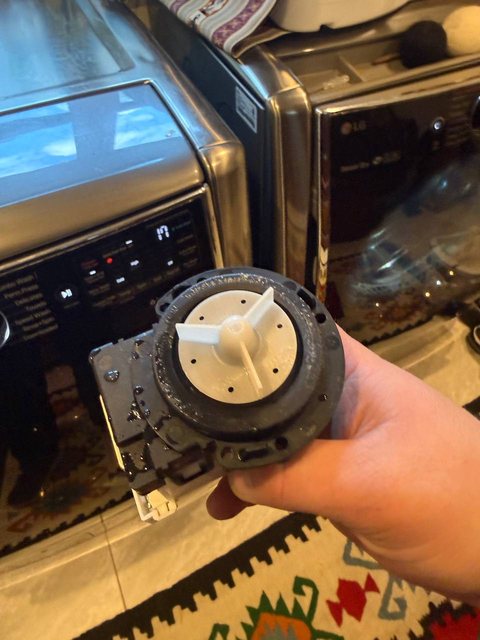
The shelves on the truck hold what this valley wears out — inlet valves, defrost heaters, heating elements, igniters, drain pumps, rollers. When something must be ordered, the return trip happens on our calendar and the figure you approved stands.
4
Proof
The machine runs a whole cycle while you watch, panels and floor go back the way they were, and the invoice that reaches your email carries the warranty term.
Ovens, ranges and cooktops in North Nampa — one written number, fixed once.
$99 puts a meter on the machine. The repair goes on the ticket as one figure with that $99 inside it, the part is usually riding in the truck, and the invoice states the warranty term. Parma pays what Davis Ave pays.