Washers · hard water and old standpipes · Caldwell
Washer repair in Caldwell when the tub will not empty
Grey water sitting in the tub with nowhere to go, a Caldwell washer that hums through the fill and then never spins, water working its way out under the front panel.
$99 to diagnose — folded into the repair once you say yesON THE TRUCK Drain and spin faults12 MIN from Davis Ave · the drive never shows on the invoice
Caldwell pumps its city water from the ground, hard as it comes, and the washers here show it. In the 1910s to 1950s houses between the College of Idaho and the old downtown grid the laundry hookups are often original galvanized stubs with a hose bib on each, and the inlet screens on a ten-year-old washer are packed with scale flakes that came loose from those pipes. In the subdivisions off Ustick and Middleton Rd the picture is different: a softener in the garage, a builder-package Whirlpool or GE pair, and a laundry closet upstairs where a leak is found by the ceiling below it rather than the floor.
What fails is mostly mechanical and mostly predictable. When a sock or a hair tie gets into the drain pump, the cycle halts with the tub still full. A lid lock on a newer top-loader clicks and refuses, and the machine will not spin until it is convinced the lid is closed. Front-loaders in the newer builds lose their door boot to a folded coin or a zipper and start leaving water on the floor of the closet. A house near the rodeo grounds with a rental upstairs and a rental downstairs will have two machines sharing one drain standpipe, and the overflow looks like a washer fault until somebody checks the pipe.
What each Caldwell symptom tends to mean
Fills, agitates, never drains
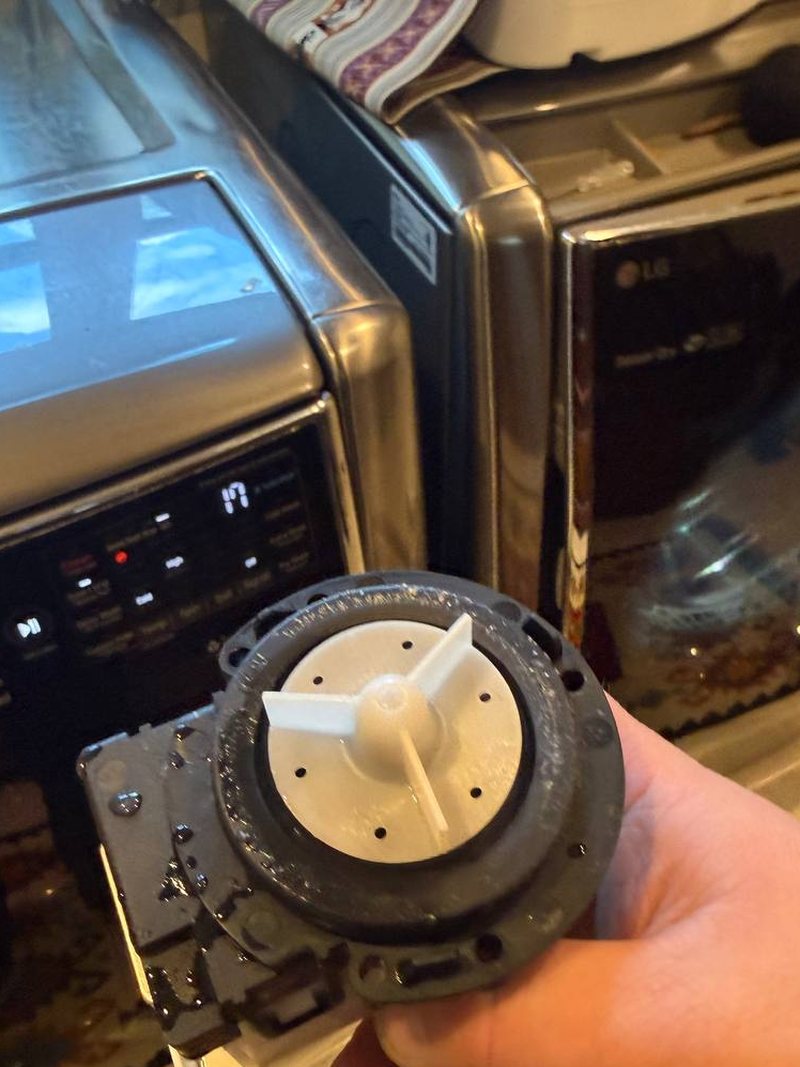
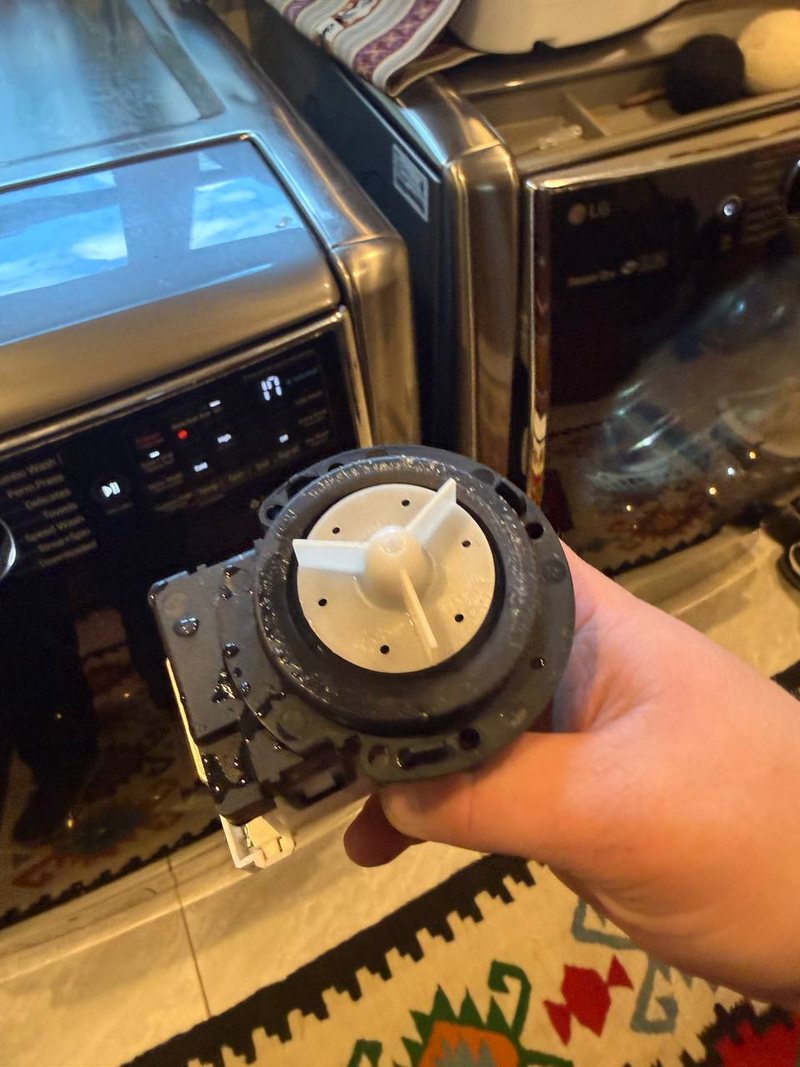
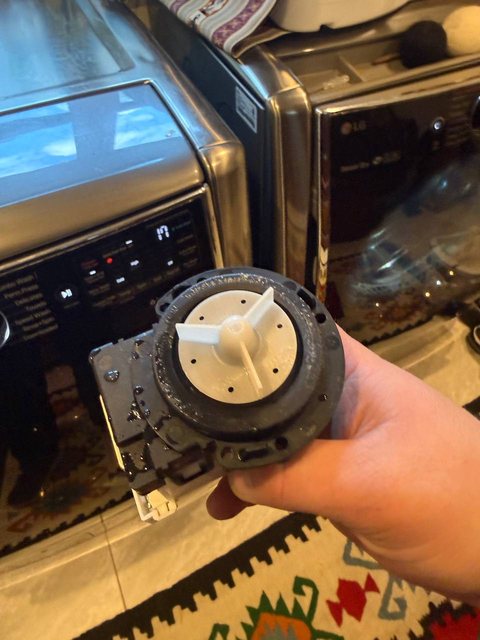
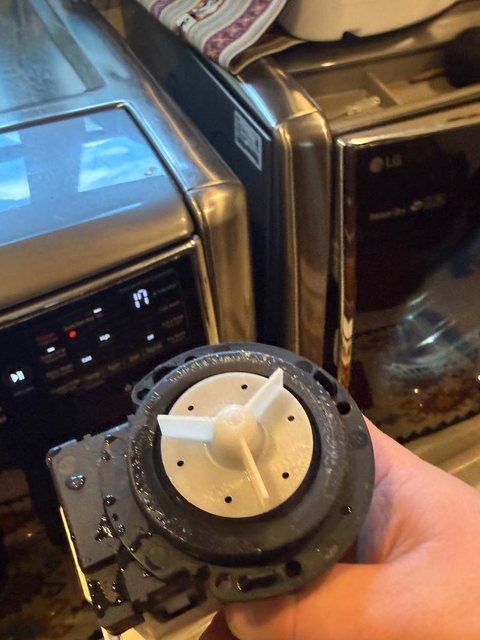
A blocked or failed drain pump. The pump housing comes apart, whatever the load fed it comes out, and the windings get metered; a burned or cracked pump is replaced. Near downtown Caldwell a slow drain is sometimes the old standpipe rather than the washer, and you hear that instead of buying a pump.
Drains but will not spin
Top-load: a lid switch or lock, a belt worn thin, or a clutch that has let go. Front-load: the motor control board or a shaft bearing. Readings on the switch and the motor come before the cabinet opens, so the repair fits the fault and not a guess.
Water on the floor at the front
Front-load door boots tear, dispenser drawers overflow when a hose kinks, and drain hoses split where they bend behind the cabinet. Panels come off, the machine fills and drains, and the drip gets traced to where it begins rather than where it collects.
Loud banging on spin
Suspension rods and springs on a top-loader wear out and let the tub slam the cabinet; a front-loader with a growl that gets louder on spin usually has a failed drum bearing. Rods are a truck repair. A bearing is a longer job, and we give the number so you can weigh it.
Lid locked, lights on, nothing happens
Lid locks fail electrically more than mechanically. We check for voltage at the lock, test the switch inside it and replace the assembly; most models are on the truck. When the board is not sending the signal, the part changes and so does the written price.
Fill takes too long or times out
Inlet screens plugged with scale and pipe flakes, or an inlet valve that has narrowed so far it cannot pass water in the time the control allows. Screens get cleaned, each solenoid gets metered, and a valve stuck part-open or part-closed gets replaced.
The procedure
Fill, drain and spin watched with the cabinet open before any part is named
Pump, motor, lid lock and valve solenoids metered for resistance
A single written repair price, and the $99 already sits in it
Truck stock covers pumps, lid locks, belts, valves and suspension rods
A complete wash cycle to the end, then the warranty goes onto the invoice in writing
Caldwell washer repair, stage by stage
A washer gets diagnosed by running it with the technician standing over it. Fill first: is the water arriving at the right rate through both valves. Then agitate or tumble: does the motor take the load without tripping. Then drain: is the pump moving water or just humming. Then spin: does the lid lock engage and does the tub come up to speed without walking. Each stage that fails gets a meter on the part responsible, because a pump that hums and a pump that is jammed read differently and one of them costs nothing but time to clear. When the cause is outside the machine, such as a standpipe in an older Caldwell house that cannot swallow a modern pump’s output, you hear that instead of a parts pitch.
Whirlpool, Maytag and GE, Samsung and LG, Frigidaire, Kenmore, Amana, Electrolux, Bosch and Speed Queen all come through, along with the stacked pairs that the builders put into the two-story houses off Ustick. A landlord with a student rental near the college says yes by text while the tenant handles the door; email brings the photo, invoice and warranty afterward. People who commute to Boise can take the first stop of the morning and be on the freeway before the window closes. The machine does not change the arithmetic: $99 buys the diagnosis, that $99 lives inside the written price once you say yes, and no Caldwell washer repair gets a figure until the meter has been on it, never from a chart.
Every washer repair in Caldwell gets one written price once the metering is finished. With a yes, the $99 diagnostic lives inside that price; with a no, the visit comes to $99 and the machine goes back together. Request service →
Asked in Caldwell
My Caldwell washer leaves clothes soaking wet. Is that the pump or the spin?
Could be either, which is why we test both. If the tub still holds water at the end, the drain side is the problem: pump or hose. If the tub is empty but the clothes are heavy, the machine is not reaching spin speed, which points at the lid lock, belt, clutch or motor control. The meter settles it.
Is the hard water in Caldwell actually bad for a washer?
It is hard on the inlet valves and screens more than the rest of the machine. Scale narrows the valve until fills take too long and the control gives up. A softener slows this down; an older house without one will see a valve replaced every several years. We clean screens as part of any inlet-side repair.
Are stacked units and front-loaders something you handle?
Yes, including the stacked pairs in the newer subdivisions off Middleton Rd, where nothing happens to the washer until the dryer is lifted off it. We bring what it takes to unstack safely, and we put it back the way it was. The truck carries boots, pumps and door locks for the front-loaders we see most.
What is the wait for a washer visit in Caldwell?
Most washer calls are slotted inside the week, and next day is common. A washer sitting full of water is worth mentioning when you call, because we can walk you through getting the water out so it does not sour before the visit. For anyone who cannot be home Monday to Friday, there are Saturday morning stops.
Suppose the washer is past saving?
Then we tell you that at the diagnostic and you pay $99, nothing more. A bearing job on a fifteen-year-old front-loader or a transmission on an old top-loader can cost more than the machine is worth, and having the figure on paper means you decide with a real number rather than a guess.
The phone is quicker; the form lands on the same desk. Both get you a text with a window, and until a technician has had a meter on the machine the only figure anyone quotes is $99.
Window texted to you; the technician will call if you would rather talk
$99 buys the meter reading and the diagnosis — no money before that
The repair as one written figure, $99 folded in
Warranty term printed on the invoice
How a visit runs
Four steps, and no step five on the invoice
1
Window
Ring the shop or fill in the form; dispatch answers with a window, and a text follows as the truck pulls off Davis Ave — first stops go to the Boise commuters, Saturday mornings to everyone else.
2
Meter
Measurements come before opinions: amps at the compressor, degrees on the shelf, ohms across the element. The failed part gets its everyday name from the technician, who then writes the repair as a single figure, $99 folded in.
3
Part
The shelves on the truck hold what this valley wears out — inlet valves, defrost heaters, heating elements, igniters, drain pumps, rollers. When something must be ordered, the return trip happens on our calendar and the figure you approved stands.
4
Proof
The machine runs a whole cycle while you watch, panels and floor go back the way they were, and the invoice that reaches your email carries the warranty term.
Washers in Caldwell — one written number, fixed once.
$99 puts a meter on the machine. The repair goes on the ticket as one figure with that $99 inside it, the part is usually riding in the truck, and the invoice states the warranty term. Parma pays what Davis Ave pays.