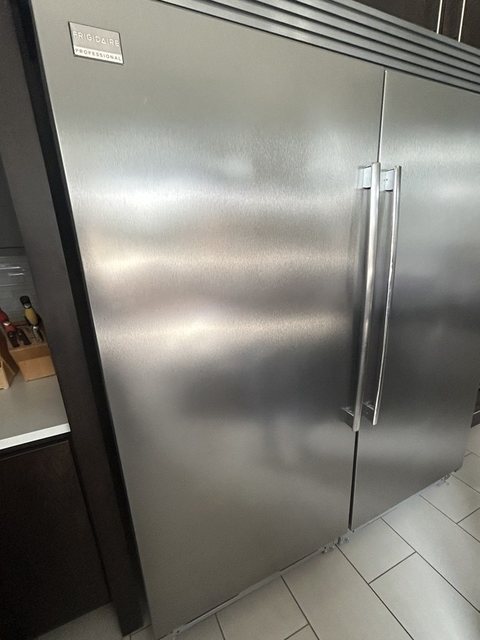
Refrigerators · freezers · well-water kitchens · South Nampa
Refrigerator repair in South Nampa, from Greenhurst to the lake
A freezer full of last fall’s beef going soft, a refrigerator humming but not cooling, water pooling on the kitchen floor.
$99 to diagnose — folded into the repair once you say yesON THE TRUCK Same-day for warm boxes called before noon8 MIN from Davis Ave · the drive never shows on the invoice
Refrigerators from the subdivisions down to the refuge
Refrigerators & freezers · South Nampa & Lake Lowell
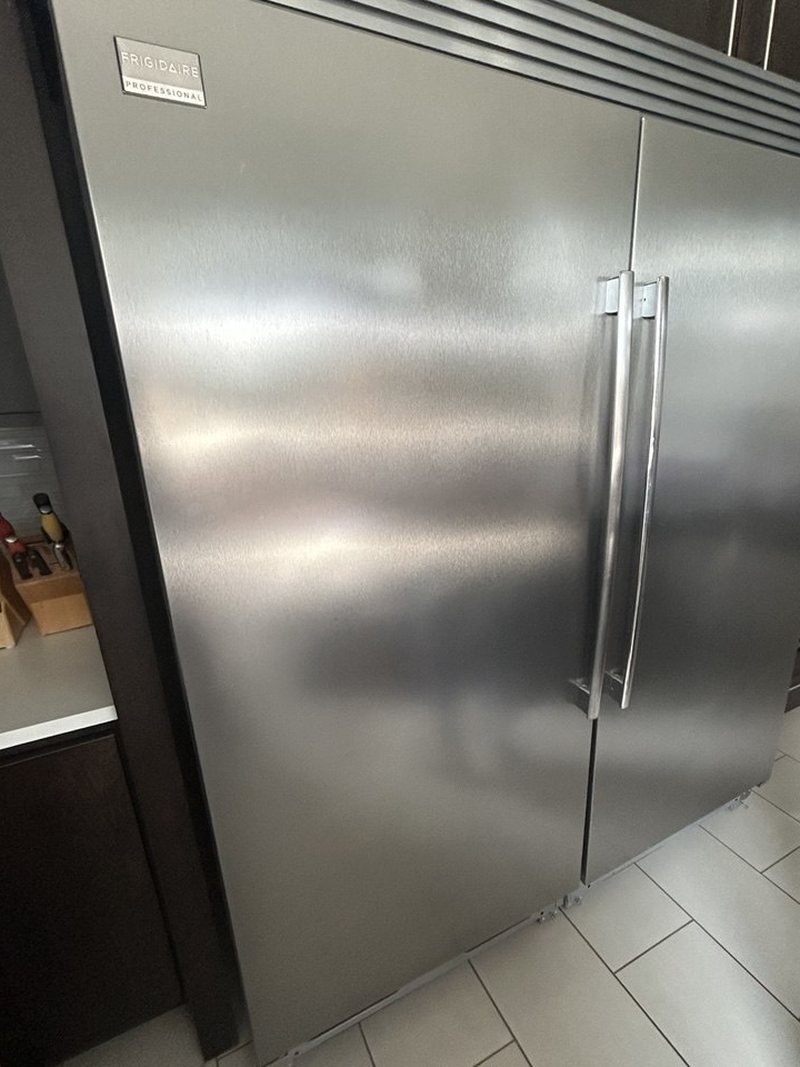
The truck leaves Davis Ave and heads south on 12th Ave Rd, and the neighborhood changes every mile. Along Greenhurst Rd and Southside Blvd the houses are 1990s and 2000s subdivisions on city water with a softener in the garage. Past Lake Lowell Ave the lots stretch out, the mailboxes move to the road, and each house pumps its own well water up, hard, and more often than not carrying iron. Down by the Deer Flat refuge and the orchards there are second homes and farmhouses where the refrigerator in the kitchen is backed up by a chest freezer in the shop and a beer refrigerator on the porch. We work all of it on the same card.
The lake side has its own failure pattern. Chest freezers full of a half beef get ignored until the lid seal frosts over, and then they get noticed in August when the shop hits 100 degrees and the compressor cannot shed heat through a coil coated in dust. Scale from the well settles in the fill valve and the ice maker long before the cold side has anything to say. In the subdivisions off Greenhurst Rd the calls are the usual builder-unit troubles: a defrost heater open, an evaporator fan seized, a door gasket torn by a kid hanging on the freezer drawer. Power blips off the summer storms reset boards on the newer inverter models, and some do not come back.
Six symptoms and what is usually behind them
Chest freezer in the shop went soft
Almost always heat. The coil is a wire grid on the back or under the skin, and under a coat of dust the compressor cooks itself until the overload cuts it off. We clean it, check the start relay and the lid gasket, and meter the compressor. If the windings are shot you hear that before any repair is started.
Refrigerator hums but the air inside is warm
Humming means the compressor is trying. Either the condenser fan has quit and it is running hot, the start relay has failed, or it is running but the evaporator fan is not moving cold air into the box. The clamp meter separates those on the first pass, and each has a different price on paper.
Freezer fine, fresh food creeping toward 50
All the cold starts in the freezer and gets blown upstairs through a damper. When the defrost heater or thermostat fails, ice buries the evaporator and the air stops moving. A stuck damper does the same thing on some Samsung and LG units. We defrost, meter and replace the piece that actually failed.
A puddle spreading out from under the refrigerator
Usually the defrost drain has plugged and the meltwater from every cycle is running off the drain pan onto the floor. On well water the drain trough scales up faster. We clear it, check the pan and the drain heater, and rule out the ice maker supply line as the true source.
Frost building on the freezer’s rear wall
Either the gasket is leaking, the drawer is closing crooked, or defrost has quit running. The paper-strip test finds the gasket; the meter finds the heater. Orchard-country houses with a door that faces a dusty drive get gaskets that wear early, and those are on the truck.
Second refrigerator quit during the winter fog
A refrigerator in an unheated shop or garage reads the cold room as cold enough and never runs, so the freezer side thaws while nothing looks broken. It is a placement problem more than a parts problem. It gets tested, you hear whether your unit takes a heater kit or wants a garage-rated replacement, and the visit stops there if neither applies.
The procedure, subdivision or acreage
Shelf temperature and compressor amperage read before we say what it is.
What failed gets a plain name; the repair gets a single figure.
Say yes and your $99 becomes part of that figure.
Parts for Samsung, Whirlpool, LG, GE and Frigidaire ride along on the truck.
Box cooled down and proven, floor dried, warranty printed on the emailed invoice.
How refrigerator repair works in South Nampa
A refrigerator call on the south side starts the same way whether the house is on Southside Blvd or a gravel lane off Lake Lowell Ave. Both compartments get a thermometer, the compressor gets a listen and then a clamp meter. High current with a hot coil says heat; no current with a hum says relay or compressor; normal current with a warm box says defrost or airflow. Then the evaporator cover comes off, because the frost pattern tells the story: a full white block means defrost, a bare coil with frost only on the first pass means the sealed system. Then the part is named, the number is written, and you decide.
The brands are the usual ones. Whirlpool and Maytag lead, then GE, Samsung and LG, then Frigidaire, KitchenAid, Bosch, Kenmore, Amana, Electrolux and Hotpoint, plus the chest freezers that carry a different label than the kitchen refrigerator. Second homes out by the refuge are handled by text: the owner approves the written number from wherever they are, and the photo, invoice and written warranty land in their email. Gate codes and loose dogs go in the request so nobody waits at the road. A warm refrigerator reported before noon gets a window that same day; other calls land within the week, often the next morning. Once you approve, the $99 you paid to diagnose is simply part of the repair total; if you decline, the visit ends at $99, and the drive south of town adds nothing either way.
South of Greenhurst Rd or out past the lake, diagnosing the refrigerator costs $99, and a yes makes that $99 part of the single repair figure. No price gets named ahead of the meter, and once named it goes on paper. Request service →
Asked in South Nampa & Lake Lowell
Do you come out to the acreage past Lake Lowell?
Yes, and the invoice carries no mileage line. The service area runs from Greenhurst Rd down through Lake Lowell Ave to the refuge and the orchards, and everything inside it is the same $99 diagnostic. Put the gate code and any dog in the request and the technician will not have to call from the road.
Does well water hurt a refrigerator?
Not the cold side, but it works on the water side. Iron and scale choke the water line and the ice maker’s own fill valve, and they plug the defrost drain trough faster than city water does. If the refrigerator has a water filter, change it on schedule; and a softener gone empty of salt shows up first in the ice.
My chest freezer in the garage is thawing. Same-day?
A thawing freezer called in before noon gets a same-day window like a warm refrigerator does. Until we arrive, keep the lid shut and do not move the food. Most chest freezer failures in a South Nampa garage in summer are a clogged coil or a failed start relay, both fixed from the truck.
Can you handle the refrigerator in my lake house while I am away?
We can. Leave the entry arrangement in the request, and the technician sends you a photo of the machine and the meter reading before writing the number. You approve by text, we do the repair, and the invoice with the written warranty goes to your email. Nothing is done without the approval in writing.
What happens if the repair is not worth it?
You hear it plainly. When an older unit’s compressor reads open or its sealed system has lost charge, the technician still writes the one number, then tells you when replacing makes more sense. You pay the $99 for the diagnosis and nothing more, and the refrigerator is left put back together.
Refrigerators and freezers in South Nampa and Lake Lowell: get a window.
The phone is quicker; the form lands on the same desk. Both get you a text with a window, and until a technician has had a meter on the machine the only figure anyone quotes is $99.
Window texted to you; the technician will call if you would rather talk
$99 buys the meter reading and the diagnosis — no money before that
The repair as one written figure, $99 folded in
Warranty term printed on the invoice
How a visit runs
Four steps, and no step five on the invoice
1
Window
Ring the shop or fill in the form; dispatch answers with a window, and a text follows as the truck pulls off Davis Ave — first stops go to the Boise commuters, Saturday mornings to everyone else.
2
Meter
Measurements come before opinions: amps at the compressor, degrees on the shelf, ohms across the element. The failed part gets its everyday name from the technician, who then writes the repair as a single figure, $99 folded in.
3
Part
The shelves on the truck hold what this valley wears out — inlet valves, defrost heaters, heating elements, igniters, drain pumps, rollers. When something must be ordered, the return trip happens on our calendar and the figure you approved stands.
4
Proof
The machine runs a whole cycle while you watch, panels and floor go back the way they were, and the invoice that reaches your email carries the warranty term.
Refrigerators and freezers in South Nampa and Lake Lowell — one written number, fixed once.
$99 puts a meter on the machine. The repair goes on the ticket as one figure with that $99 inside it, the part is usually riding in the truck, and the invoice states the warranty term. Parma pays what Davis Ave pays.