Ovens, ranges and cooktops · propane, gas and electric · South Nampa
Oven and range repair in South Nampa, yellow flames and cold ovens
A propane burner burning yellow and sooting the pans, an oven that stalls well short of the dial, a glass top where one zone stays cold.
$99 to diagnose — folded into the repair once you say yesON THE TRUCK Propane conversions checked8 MIN from Davis Ave · the drive never shows on the invoice
Ovens, ranges & cooktops · South Nampa & Lake Lowell
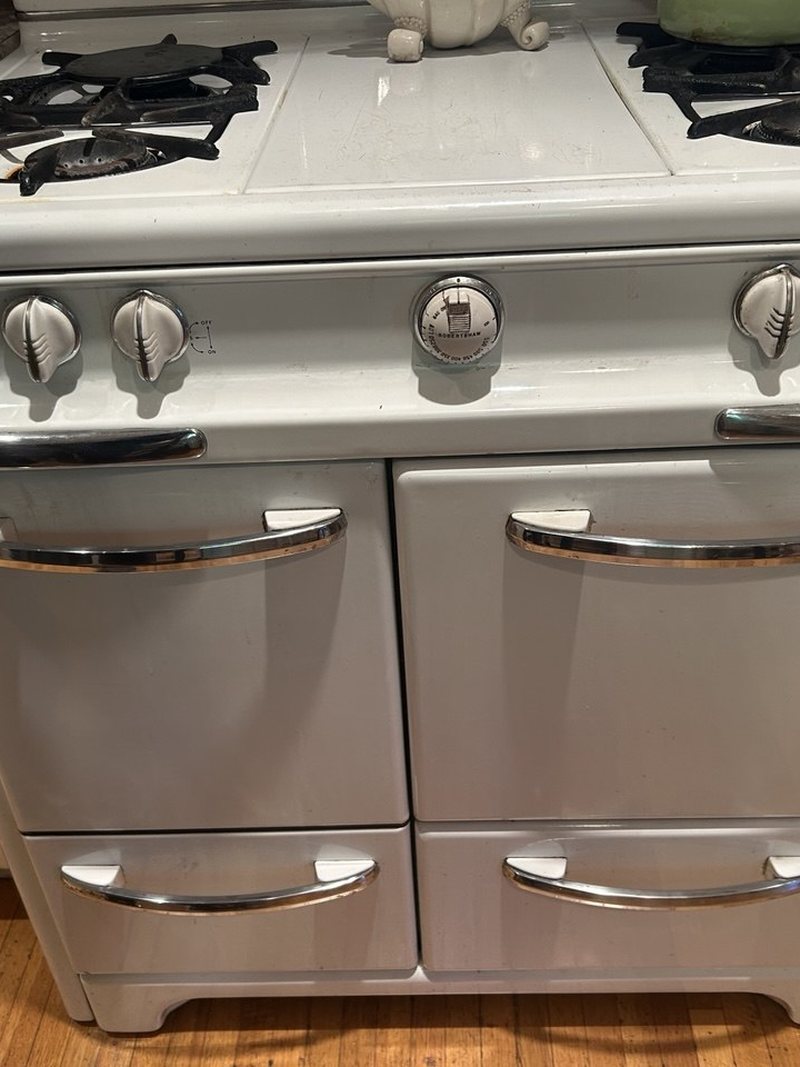
South of the shop the fuel changes with the address. In the subdivisions along Greenhurst Rd and Southside Blvd the ranges are electric glass-tops or natural gas from Intermountain Gas, mostly Whirlpool, GE and Frigidaire units that came with the house in the 1990s and 2000s. Out along Lake Lowell Ave and down 12th Ave Rd toward the orchards and the refuge, the farmhouses run their ranges off a propane tank beside the shop building, and a fair number of those ranges were converted from natural gas by whoever sold them. The truck runs south on 12th Ave Rd from Davis Ave and covers both kinds on the same card.
Propane brings its own failures. A range converted without the right orifices and air shutter setting burns yellow, soots the bottom of every pan, and leaves the oven slow to heat because the flame is lazy. A weak igniter on a propane oven takes longer to fail than most people wait. In the subdivisions the calls are electric: a bake element that opened, a radiant element under the glass that reads dead, an infinite switch that welded and left a burner on high. Dust off the orchards and the gravel drives packs burner ports on any gas top, and a summer storm off the lake can take out a control board in either kind of house.
What the range is telling you, south of town
Propane flame burns yellow and soots the pans
Somebody switched the range over from natural gas and left the old orifices in, or never touched the air shutters. A yellow flame is a wrong mixture, not a dirty burner. We fit the correct orifices, set the shutters, and check the oven burner and the regulator so the whole range burns blue.
Oven takes an hour to reach temperature
On gas or propane a weakened igniter opens the valve late, or has stopped opening it; on electric the bake element is failing or the sensor has drifted. We meter the igniter current and the element resistance and read the sensor as the oven warms. The part that reads wrong gets a written number.
Glass-top zone cold, or running on high
Either the radiant element reads open or the infinite switch has fused shut. Stuck on high is the switch, and the breaker stays off until the truck pulls in. Element and switch are reached from the back, both go on the meter, and the one that failed is swapped for truck stock.
Oven temperature swings or bakes uneven
A sensor that has wandered, a door gasket flattened at one corner so heat escapes, or a bake element sagging toward one wall. A thermometer sits in the cavity while the sensor reports, the gasket gets a look, and the control is recalibrated when the parts turn out to be fine. Farmhouse ovens with a warped door hinge bake cold on one side.
Burner clicks and clicks
The spark electrode is wet, cracked or coated in boil-over, the burner ports are plugged with dust, or the spark module is firing weakly. We clean the ports and cap, dry and check the electrode, and meter the module. On the acreage the ports are usually the answer.
Control panel dead after a storm
A board that lost its power supply in a brownout, a blown thermal fuse behind the panel on some models, or a keypad ribbon. We confirm power at the junction box, meter the transformer and the fuse, and only then name the board. Boards are not sold on a guess.
The procedure, propane or electric
Flame color and igniter current checked before any part is named.
Bake element, sensor, switches and spark module read on the meter.
Propane orifices and shutters verified on every converted range we see.
The repair priced on paper as one figure with the $99 counted in.
Oven brought to temperature and checked, floor swept, the warranty in writing on the invoice.
Oven and range repair in South Nampa, from the meter up
The visit starts with the range lit. On a gas or propane unit the technician looks at the flame first, because color tells whether the mixture is right, and then meters the oven igniter for current while it glows. On an electric unit the bake and broil elements are read for resistance and looked at for a break, and the radiant elements and switches on a glass top are read through the back. The sensor is checked against a known temperature. F-codes are read, cleared and made to happen again. A converted propane range gets its orifices checked whether the complaint mentioned them or not. Only then does the part get its name, and the price goes down on paper, $99 included.
Whirlpool and Maytag, GE, Hotpoint, Samsung, LG and Frigidaire, plus KitchenAid, Bosch, Electrolux, Kenmore and Amana ranges, wall ovens and cooktops are all regular work, on natural gas, propane, electric or induction. Lake houses and farm-labor housing along Lake Lowell Ave are handled with the owner by text, with the photo, invoice and written warranty emailed. Long drives and gates are ordinary here and go in the request. Most windows fall within the week, often the following day; people heading to Boise get the early stop and Saturday mornings serve the rest. No range repair here gets a price until the diagnostic is finished; afterward it gets one written figure. Approve, and that figure has the $99 in it; decline, and the bill is $99 with nothing added for the acreage.
A range diagnostic in South Nampa or out on the Lake Lowell acreage is $99, and that $99 is already inside any written repair you approve rather than an extra line. No price is written before the meter has done its work. Request service →
Asked in South Nampa & Lake Lowell
My propane range past Lake Lowell burns yellow. Is that a problem?
It is a wrong mixture, and it soots the pans and starves the oven, so it needs correcting. Nearly every time, the range came off natural gas and nobody fitted propane orifices. We put the right orifices in, set the shutters, and check the regulator. Until then, run the exhaust fan and keep an eye on the flame.
Do you repair wall ovens in the South Nampa subdivisions?
The GE and KitchenAid wall ovens in the Greenhurst Rd and Southside Blvd houses share the same faults as a freestanding range: an open bake element, a drifted sensor, a control board after a storm. The oven comes out of the cabinet for the back panel, and it goes back the same visit.
The oven is slow but the burners are fine. What is it?
On gas or propane, a weak oven igniter that opens the valve late. On electric, a bake element on its way out or a sensor reading low. Both are a meter reading, not a guess. The truck carries igniters and elements for the usual brands, so this is normally a one-visit repair.
A glass-top burner stays on high. What do I do?
Turn the breaker off and leave it off. The infinite switch has fused shut, and the burner runs until the power is cut. Call and tell dispatch it is stuck on; it moves up the list. We replace the switch and check the element under it, then test every zone before leaving.
What is the $99 for on a range call in South Nampa?
It buys the technician’s time, the meter reading and the answer: which part failed and a written figure for fixing it. Green-light the repair and that $99 is one ingredient of the figure. Say no and your bill is $99, nothing beyond it, whether the house is on Southside Blvd or at the far end of a gravel drive.
Ovens, ranges and cooktops in South Nampa and Lake Lowell: get a window.
The phone is quicker; the form lands on the same desk. Both get you a text with a window, and until a technician has had a meter on the machine the only figure anyone quotes is $99.
Window texted to you; the technician will call if you would rather talk
$99 buys the meter reading and the diagnosis — no money before that
The repair as one written figure, $99 folded in
Warranty term printed on the invoice
How a visit runs
Four steps, and no step five on the invoice
1
Window
Ring the shop or fill in the form; dispatch answers with a window, and a text follows as the truck pulls off Davis Ave — first stops go to the Boise commuters, Saturday mornings to everyone else.
2
Meter
Measurements come before opinions: amps at the compressor, degrees on the shelf, ohms across the element. The failed part gets its everyday name from the technician, who then writes the repair as a single figure, $99 folded in.
3
Part
The shelves on the truck hold what this valley wears out — inlet valves, defrost heaters, heating elements, igniters, drain pumps, rollers. When something must be ordered, the return trip happens on our calendar and the figure you approved stands.
4
Proof
The machine runs a whole cycle while you watch, panels and floor go back the way they were, and the invoice that reaches your email carries the warranty term.
Ovens, ranges and cooktops in South Nampa and Lake Lowell — one written number, fixed once.
$99 puts a meter on the machine. The repair goes on the ticket as one figure with that $99 inside it, the part is usually riding in the truck, and the invoice states the warranty term. Parma pays what Davis Ave pays.