A code on a Samsung refrigerator display is a symptom, not a diagnosis. It names the circuit that tripped, not the part that failed.
Monday–Friday 7:30–5:30 · Saturday 8–1 · closed Sunday

Refrigerator & Freezer Repair$99 with a meter · rides inside the repair
Washing Machine Repair$99 with a meter · rides inside the repair
Clothes Dryer Repair$99 with a meter · rides inside the repair
Dishwasher Repair$99 with a meter · rides inside the repair
Range, Oven & Cooktop Repair$99 with a meter · rides inside the repair
Ice Maker Repair$99 with a meter · rides inside the repair
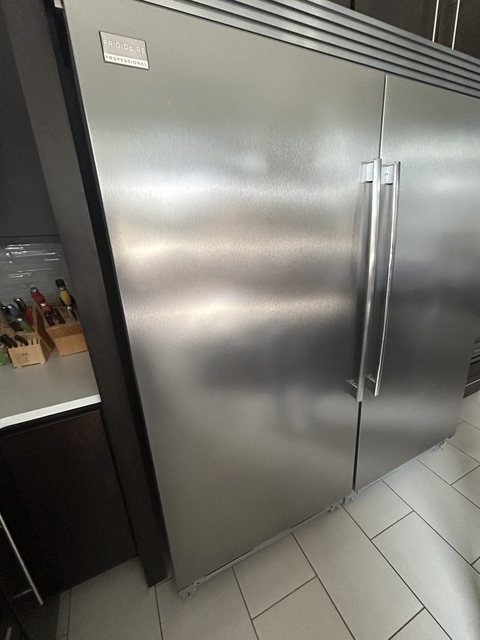
A lot of Nampa kitchens hold a Samsung, most of them the French-door style or a side-by-side. Most came home from the big-box stores on Garrity Blvd or the stores near the Caldwell exits, and a good share of the 2015-and-newer houses off Cherry Ln and Can-Ada Rd got one as part of the kitchen package. The panel on the door doubles as a fault reporter. When a sensor reads outside its range, a fan stalls or the compressor refuses to start, the board posts a short code where the temperature normally sits. The code tells you which circuit complained. It does not tell you whether the sensor, the connector behind the back wall, or the board reading it is the part that quit.
The valley works these boxes hard. A July run of 100-degree afternoons pushes a garage refrigerator in South Nampa past what its condenser can shed, especially with a season of cottonwood fluff and field dust from Southside Blvd packed into the coil, and that is when the compressor and inverter codes show up. Hard Nampa city water, and the well water out past Lake Lowell toward Melba, scales up the fill line to the ice maker, and eventually the fill-tube heater and the ice-room sensor start complaining. Idaho Power thunderstorm outages in August put 88 88 on displays from Middleton to Kuna, and a brownout that only dims the lights can still confuse a display board.
| Code | What the display means | Usually behind it | Safe to check first | What we do |
|---|---|---|---|---|
| 22E / 22C | The board is not seeing the fresh-food evaporator fan turn at the speed it expects. | Frost locking the fan in the refrigerator section, then a worn fan motor, then a connector or board fault. | Unplug the refrigerator for two minutes and plug it back in. If the code returns within a day, the fan needs a look. | We pull the back panel of the fresh-food section, check for ice on the fan, meter the motor for voltage and resistance, and replace the fan or fix the defrost fault that iced it. |
| 21E / 21C | The freezer evaporator fan is stalled or spinning too slowly. | Ice around the freezer fan from a defrost problem, then a worn fan motor, then the connector at the fan. | Make sure nothing is stacked against the back vent of the freezer, then shut the door and listen for the fan after a minute. | We check what the board is sending the fan motor and meter the motor itself, thaw and inspect the evaporator, and replace the fan or the defrost part that let the ice build. |
| 5E / 5C | The fresh-food defrost sensor is reading open or shorted. | The sensor itself, then a loose connector behind the back panel, then a board that cannot read it. | Unplug for two minutes. A sensor code that clears and stays clear was a glitch; one that comes back is a part. | We meter the defrost sensor against its resistance chart at a known temperature and replace it, or repair the harness if the sensor tests good. |
| 8E / 8C | The ice maker sensor is out of range. | Ice buildup in the ice room, then the ice maker sensor, then the whole ice maker assembly that carries the sensor. | Pull the ice bucket, dump it, and check whether the ice-room walls have frosted over in a sheet. | After thawing the ice room we put a meter on the sensor and the ice-room fan; if either the sensor or the motor inside the maker has failed, the whole ice maker assembly is swapped. |
| 33E | The heater on the ice maker fill tube is not doing its job. | The fill-tube heater, then its connector, then a fill tube frozen solid behind a slow, scaled inlet valve. | Look at the ice in the bucket. Hollow or small cubes alongside this code point to a slow fill. | We meter the fill-tube heater, thaw the tube, check the inlet valve flow for scale, and replace the heater or the valve. |
| 39E / 39C | The ice maker started a harvest cycle and did not finish it. | Ice frozen around the tray or ejector, then the ice maker motor, then the ice-room sensor. | Empty the bucket and make sure the ice maker paddle is not pinned by a chunk of ice. | We run the ice maker test cycle, watch the tray motor and meter the sensor; a failed motor or sensor means a new ice maker assembly. |
| 41E / 41C | Communication between the main board and the door display or Family Hub screen dropped. | A power blip from a summer storm, then the display board, then the harness or main board. | Unplug for two minutes. Most storm-related 41E codes clear and stay gone. | We check voltage at the display connector, test the harness for continuity, and replace the display or main board that stopped talking. |
| 84E / 84C | The compressor tried to start and could not. | The inverter board feeding the compressor, then low line voltage from a brownout, then a seized compressor. | Unplug for two minutes and listen when the power comes back. Do not feed the refrigerator through an extension cord. | We meter the inverter output, check line voltage at the outlet, and test the compressor windings. An inverter board rides on the truck; a compressor means talking about how old the box is first. |
| 1E / 1C | The fresh-food temperature sensor is open or shorted. | The thermistor, then its connector, then the main board. | Cut power at the wall for two minutes. A 1E that returns is not a fluke. | With a known shelf temperature, we read the thermistor’s resistance against the chart, then replace it or repair the harness. |
| OF OF | Cooling is switched off. This is showroom mode, not a fault. | Someone held the wrong two buttons while wiping the panel, then a display board with a stuck key. | Find the two-button combination for your model in the manual and hold them until a temperature returns to the display. | If the buttons will not bring it back, we test the display board and touch panel for a stuck key and replace the one that failed. |
| PC ER | The main board cannot talk to the control panel. | A loose connector at the panel after a door swap or a move, then the display board, then the main board. | Unplug the refrigerator for two minutes. If the panel comes up showing a temperature, you are done. | We check continuity between the boards, reseat and inspect the connectors, and replace the board that fails the test. |
| 88 88 | The display lost power mid-cycle and has not reset. | A power outage or brownout, then a display board that will not reboot, then the main board. | Cut the power at the wall for a couple of minutes with the doors shut, plug it back in and press any button. | We check incoming voltage, test the display and main board handshake, and replace the board that stays dark. |
A code-led diagnosis on a Samsung refrigerator starts at the panel, not the parts bin. We pull the stored codes with the button sequence for your model and write them down, because the history matters: a fan code that followed a defrost sensor code tells a different story than the same fan code alone. Then we clear them and try to bring the fault back with the doors shut and a thermometer on the shelf. Whatever the code points at gets a meter on it. A thermistor is checked against its resistance chart at a known temperature. A fan gets voltage at its plug before we condemn the motor. A compressor code gets the inverter output measured first, since that board fails more often than the sealed system.
Syringa is an independent shop. We are not Samsung’s dealer and we do not sell their refrigerators; we repair them. When a box is young enough that Samsung’s own coverage might still be in force, that gets said out loud before any $99 is spent, and you decide where to take the claim. Evaporator fans, thermistors, fill-tube heaters, inlet valves and the common inverter boards ride on the truck. A display board or a Family Hub screen usually has to be ordered, and coming back to install it adds nothing to the bill. Once the diagnostic is done the repair gets priced on paper as one figure, and that figure already has the $99 built into it. Decline the work, and your only charge is the $99.
No. A code means a reading went out of range long enough for the board to log it. A storm outage, a door left open during a party, or a frost layer from a single missed defrost can each post a code that never returns after a reset. If it comes back within a day or two, a part or a connection is failing and a meter will find which one.
Usually not. 88 88 is the display waking up after losing power and waiting to be told the outage is over. Unplug it for two minutes with the doors shut, plug it back in and press a button. If the display stays stuck on 88 88 or goes dark, the display board took the hit, and that is a repair we do in North Nampa most weeks of the summer.
Yes, and sometimes that is the whole visit. We read the stored codes, clear them, and run the refrigerator through a forced defrost or a fan test to see whether the fault comes back. If it does not, you pay the $99 and get the shelf temperature written on the invoice. If it does, that same $99 becomes part of the repair total once you approve it.
A garage off Deer Flat Rd runs above 100 degrees on an August afternoon. The condenser cannot shed heat into air that hot, the compressor runs long, and the inverter board posts a code when it cannot bring the motor up to speed. A clean condenser coil and a clear space around the box help; a garage-rated unit helps more. We meter it before deciding which.
Both, and the rest of Canyon County out to Parma and Wilder, plus Kuna, Star, South Meridian, Marsing and Homedale. The truck leaves from Davis Ave in Nampa and the invoice never carries a mileage charge. A warm Samsung called in before noon gets a same-day window because the food does not wait.

Plain meaning of each code, what tends to be behind it here, one check you can make, then our part
Open the code list →
Plain meaning of each code, what tends to be behind it here, one check you can make, then our part
Open the code list →
Plain meaning of each code, what tends to be behind it here, one check you can make, then our part
Open the code list →The phone is quicker; the form lands on the same desk. Both get you a text with a window, and until a technician has had a meter on the machine the only figure anyone quotes is $99.
Open the request formRing the shop or fill in the form; dispatch answers with a window, and a text follows as the truck pulls off Davis Ave — first stops go to the Boise commuters, Saturday mornings to everyone else.
Measurements come before opinions: amps at the compressor, degrees on the shelf, ohms across the element. The failed part gets its everyday name from the technician, who then writes the repair as a single figure, $99 folded in.
The shelves on the truck hold what this valley wears out — inlet valves, defrost heaters, heating elements, igniters, drain pumps, rollers. When something must be ordered, the return trip happens on our calendar and the figure you approved stands.
The machine runs a whole cycle while you watch, panels and floor go back the way they were, and the invoice that reaches your email carries the warranty term.
$99 puts a meter on the machine. The repair goes on the ticket as one figure with that $99 inside it, the part is usually riding in the truck, and the invoice states the warranty term. Parma pays what Davis Ave pays.