Oven and range repair in Middleton that gets dinner back on schedule
A burner that snaps and never lights, an oven in a Middleton kitchen that stalls at 300°F, an F-code on the panel after a summer storm. Gas, propane, electric and glass-top.
$99 to diagnose — folded into the repair once you say yesON THE TRUCK Same-week, often next day18 MIN from Davis Ave · the drive never shows on the invoice
Ranges in Middleton, from Main St to the propane tanks
Ovens, ranges & cooktops · Middleton
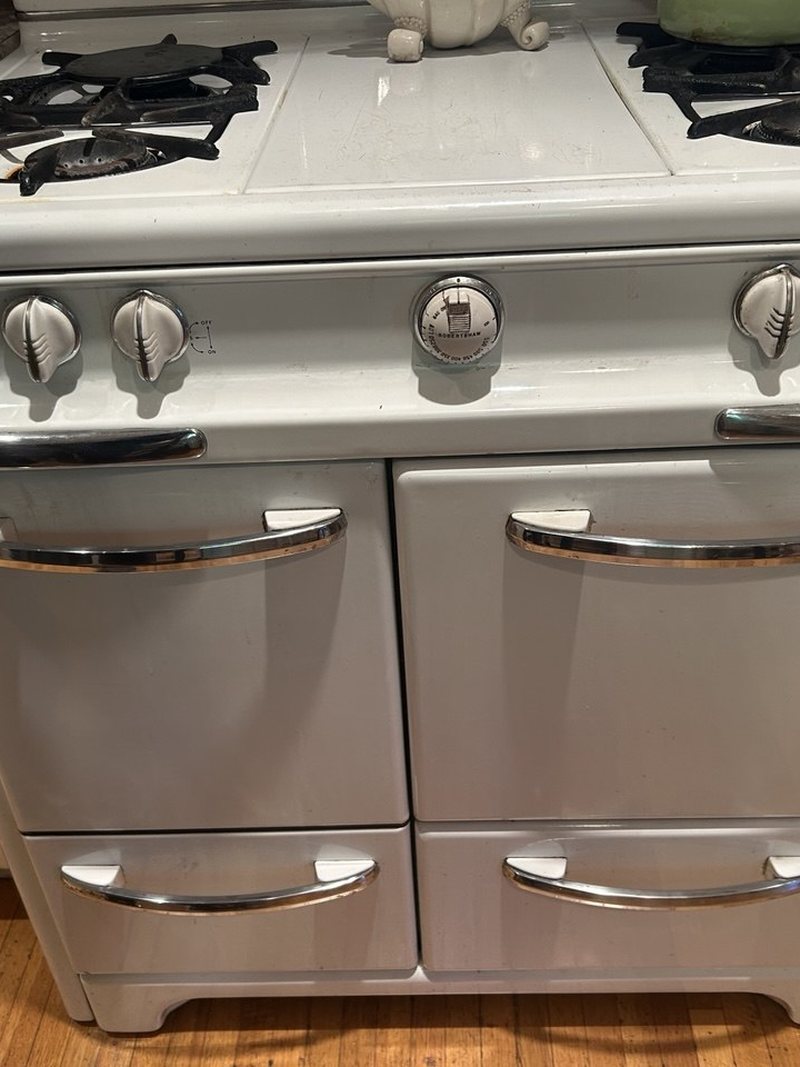
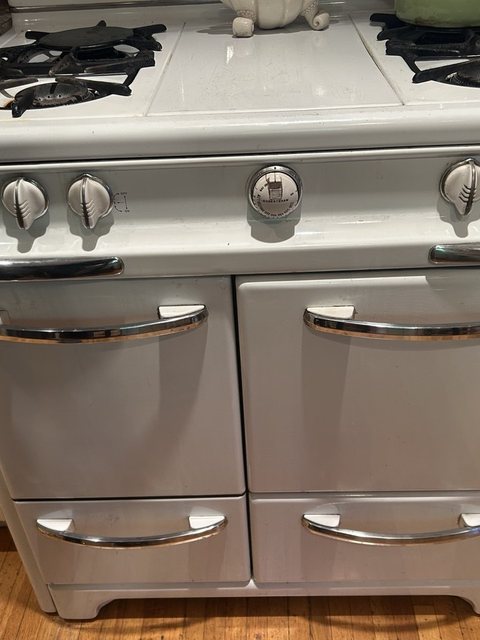
Middleton cooks on three fuels. The streets served by Intermountain Gas, which means most of the subdivisions between Middleton Rd and Hwy 44, have gas ranges; the builder packages there are mostly Whirlpool, GE and Frigidaire freestanding units with a glass-top electric option in some plans. The acreage past the town limits runs on propane, with a tank out by the shop building, and a range converted for propane by whoever installed it. The older farmhouses along the county roads have electric coil ranges that have been baking since the eighties. The truck comes up from Nampa on Middleton Rd or Hwy 44 and carries igniters, bake elements and surface switches for all three.
The July call in Middleton is a control board. An Idaho Power brownout during a thunderstorm drops the voltage for a second, the range clock resets, and some boards never come back cleanly. The panel shows an F-code or nothing at all. The winter call is an igniter: a gas oven that takes ten minutes to light, then bakes cold, has an igniter that glows as bright as ever while pulling less current than the gas valve asks for. A homeowner on a street north of Hwy 44 had been cooking Thanksgiving with the oven on 425°F to get 350°F. The igniter metered at 2.6 amps, well short of what the valve needs. New igniter, twenty minutes, and the oven held temperature within a few degrees on the next cycle.
What a Middleton range symptom usually means
Burner clicks, will not light
A wet or cracked spark electrode, burner ports plugged with field dust or a boil-over, or a dead spark module. We clean the ports, check the cap seating, meter the module and replace the electrode from the truck.
Gas oven slow to light or bakes cold
A weak igniter. It glows, but at low current the safety valve never opens fully. We meter the amperage under load, replace the igniter, and check temperature at the center of the oven through a full preheat.
Electric oven no heat, broiler works
The bake element, often with a visible blister or break. We meter it for continuity, test the relay that feeds it on the board, and fit the new element. A glass-top with a dead burner is a similar test on the radiant element and the surface switch.
Yellow flames, soot on the pans
A range converted to propane with the wrong orifices or a regulator set for natural gas. Common on Middleton acreage. We check the orifice size and the regulator pin and set the air shutters, then confirm a blue flame at every burner.
F-code on the display
Usually a temperature sensor that reads wrong, a lock switch on the door, or a board fault after a power event. The code gets read, the sensor gets metered at room temperature, and the lock gets checked before the board is condemned.
Oven temperature swings, food burns on one side
Temperature sensor drifting, a convection fan that has quit turning, or a door gasket no longer holding the heat in. We log the temperature through three cycles and meter the sensor, then fix the piece that is actually off.
The procedure
Fuel and supply confirmed first: gas pressure, propane regulator, 240-volt legs
Meter readings on igniter amperage, element resistance and the sensor
The bad part called by its plain name, one price on paper with $99 built into it
Truck stock: igniters, bake elements, electrodes, sensors and switches
Preheat run through, burners lit, flame color confirmed, warranty written on the invoice
How oven and range repair in Middleton is diagnosed
Every range visit begins with the supply. On gas, the technician confirms pressure at the manifold and watches each burner light; on propane, the regulator and orifices get a look before anything else, since a bad conversion mimics half a dozen other faults. On electric, both 240-volt legs are confirmed at the terminal block. Then the oven runs: igniter amperage under load on gas, element resistance on electric, temperature sensor resistance against the chart, and a thermometer at the middle of the oven watched across a whole preheat. An F-code is read from the panel and cleared, and the fault gets reproduced before a board is blamed. The part that failed gets its plain name, and the repair is written up as one number.
Middleton ranges, wall ovens and cooktops from the Whirlpool, GE and Frigidaire builder packages in the developments off Middleton Rd to the propane ranges on the acreage are regular work, along with the Samsung, LG, KitchenAid, Bosch and Electrolux units in the remodels and the Maytag, Kenmore, Amana and Hotpoint ranges in the farmhouses. Households commuting to Boise on Hwy 44 get the early window; Saturday mornings are open for the rest. A rental near Main St can be handled through the owner, who approves by text while the invoice and the warranty are emailed, with the gate code and the dog noted on the request. The pricing here is simple: the $99 diagnostic is the first line of any repair price you approve, not something added to it, and a declined repair leaves the bill at $99. A range repair is only ever priced after the meter work, in writing.
Oven and range repair in Middleton is priced after the $99 diagnostic, as one number on paper that already has the $99 built into it. Request service →
Asked in Middleton
Do you work on propane ranges outside Middleton town limits?
Yes. A lot of the acreage past the subdivisions cooks on propane, and a range converted with the wrong orifices burns yellow and soots the pans. We check the conversion, the regulator and the air shutters and set it right. The tank and the line to the house belong to your propane supplier.
After a storm my Middleton oven is showing an F-code. Has the board died?
Not always. A brownout can leave a code stored that clears with power off for a few minutes. If it returns we meter the temperature sensor and the door lock, because those throw codes far more often than the board fails. The board is the last thing we blame, not the first.
Can you fix a glass-top or induction cooktop?
Glass-top radiant elements, surface switches and the glass itself where the maker still supplies it, yes. Induction cooktops we repair at the board and coil level where parts are available; some builder-grade induction units have limited parts and we say so up front before you spend past the diagnostic.
Is a slow preheat normal in a new Middleton house?
No. A gas oven should light within a minute and reach 350°F in twelve to fifteen. A slow preheat is a weak igniter on gas or a tired bake element on electric. Both are common on the builder ranges around five to eight years old and both are truck-stock parts.
A burner smells like gas before it lights. Is that a problem?
A brief smell as the burner catches is normal. Gas that keeps flowing with no flame is not; turn the knob off and call. Usually it is an electrode not sparking or a port plugged with debris. We do not want you leaning over an unlit burner with a match, and neither does your kitchen.
Ovens, ranges and cooktops in Middleton: get a window.
The phone is quicker; the form lands on the same desk. Both get you a text with a window, and until a technician has had a meter on the machine the only figure anyone quotes is $99.
Window texted to you; the technician will call if you would rather talk
$99 buys the meter reading and the diagnosis — no money before that
The repair as one written figure, $99 folded in
Warranty term printed on the invoice
How a visit runs
Four steps, and no step five on the invoice
1
Window
Ring the shop or fill in the form; dispatch answers with a window, and a text follows as the truck pulls off Davis Ave — first stops go to the Boise commuters, Saturday mornings to everyone else.
2
Meter
Measurements come before opinions: amps at the compressor, degrees on the shelf, ohms across the element. The failed part gets its everyday name from the technician, who then writes the repair as a single figure, $99 folded in.
3
Part
The shelves on the truck hold what this valley wears out — inlet valves, defrost heaters, heating elements, igniters, drain pumps, rollers. When something must be ordered, the return trip happens on our calendar and the figure you approved stands.
4
Proof
The machine runs a whole cycle while you watch, panels and floor go back the way they were, and the invoice that reaches your email carries the warranty term.
Ovens, ranges and cooktops in Middleton — one written number, fixed once.
$99 puts a meter on the machine. The repair goes on the ticket as one figure with that $99 inside it, the part is usually riding in the truck, and the invoice states the warranty term. Parma pays what Davis Ave pays.